Wednesday, August 28, 2013

Dream, painting and poem


We were at Kanuga Conference Center for Dream Group Leader Training and started the whole business of learning how to help people invite the dreams to help them hear God speaking to them through the Collective Unconscious. Training is based on using Jungian Depth Psychology and Spiritual exercises to interact with the Right side of the brain where we move out of the rational analysis to more of a encounter with the language of symbol, myth and art. Instead of just writing notes for the Right side of my rational brain- I tried to write a poem and paint a picture. I am not a good poet and I have less talent for drawing but I have to stop the critic and welcome the vision.

The painting is of a section of a dream I had where my father and I were driving at night through the North Carolina Mountains- which we never did together in his life. The road was all torn up and I was driving the way I did when I lived in Boone- too fast as a way to impress the “ flatlanders”.  There was a bright blue barrier and a pale buckskin horse that ran across the road. The horse had a yellow blaze on its flank with what looked like a softened square root sign. My father said he needed to paint that scene- and I took it as since everybody in the dream is me I was being invited to paint. It was so helpful since when I painted it and then asked the painting questions, I found that my unconscious had a whole different reaction than my rational mind. It opened the dream up to whole new insights. 
 
Kanuga Dream 2013

 Also I had some free time and as an introvert needed to get away from all the talking with other people and then went out to canoe on the lake and wrote a poem about it. It goes;
Kanuga Sabbath 2013
Paddler wore a hat to keep
Burn away and doctor happy
J- stroking canoe while sun reflected
Paddle dipping in lake cool water
Lilly blossom bursting on pad
Turtle sliding into deep watery safety
Woken from turtle dreams, that’s if they do,
Off fallen logs sodden in place.
Yet the canoe glides on-
Glides on
Invading the quiet as paddler
Flees the noise to share
Presence with selves in non-language,
Tongues, gills, and bills unknown to
Yet bouncing beyond tympanic membranes
Beneath shared sub-persona sharing.
The paddler retreats to center in greater power
To find true self

September Tomes Perseid Meteor Shower


Parson Tom’s Tomes
In August the Persied Meteor Shower visits the earth and usually hits about the 12th of the month, which is also the birthday of my wife, Pat. The Meteors are the debris from the Comet, Swift- Tuttle, which last visited in 1992 and will visit again in 2126, as opposed to orbiting Jupiter every 11 years. The debris is hurling through space and is warmed up by our sun which melts the ice and then when it enters the earth atmosphere the small rocks burn up in the atmosphere as they fall in the gravity. For years Pat and I celebrate her birthday by looking for the meteors- on good years 50 to 60 an hour fall. Last year on the Blue Ridge Parkway with the clear darken sky it was perfect. This year Pat, Yoda and I walked down to the Chicahauk crossing on the beach but because of the ambient light from the Hilton Gardens and spotty clouds we saw only about 20 between 3:00 and 4:00 AM. We are in awe that we are hurtling through space on this large piece of frozen rock and fire we call the earth and have a rendezvous each year with other parts of the Galaxy. How we are all connected in the mind of God!
not our picture

Pat wrote a poem this year which I want to share with you.
Waiting for Stars to Fall.
My annual birthday Shower in the sky
Swift-Tuttle of days gone by
Passing through on the way to Infinity
leaving behind lighted trails
Traced in the blue/black sky.

Sitting by the end of the world
on a bench overlooking the sea
Waves crashing mid-ocean
ker--thunking on the beach below
Wind kissing my face
ever so sweet
with ocean mist and spray
Loved ones beside me on either side
                Warm skin – warm fur!
Celebrating 76 years
of life on earth.
Waiting for stars to fall
in the fullness of this night
Time – but a drop in this bucket of
                water and sky and earth and wind-
But blessed by the
spectacle of stars falling.
August 12/13 2013

Shalom

Thursday, August 15, 2013

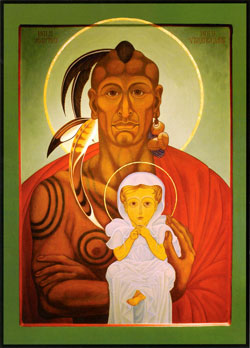
Manteo and Virginia Dare Feast Day Reflection


A Reflection on the Baptism of Virginia Dare and Chief Manteo                All Saints’, Southern Shores August 18, 2013                                                                           Thomas E. Wilson, Rector
Isaiah 60:1-4               Ephesians 2:13-22      John 10:14-16

http://2.bp.blogspot.com/--p0HDANdgGc/TbGWW30nYaI/AAAAAAAAnBg/NIF1lgL-iCc/s400/Manteo%2Band%2BVirginia%2BDare%2Bfrom%2Bthe%2BEpiscopal%2BDiocese%2Bof%2BNorth%2BCarolina.jpg
Icon written for East Carolina Diocese
Today we remember the Baptism of Virginia Dare and the Croatan Native American Chief Manteo in 1587, twenty miles down the road, at the Fort Raleigh Roanoke Island Settlement, what we now call the “Lost Colony”. Dare was the first English Child born in the what was called the “New World”, and Manteo was the first Native American to be baptized as an Anglican Christian. Today many of the churches in the dioceses of East Carolina, North Carolina and Western North Carolina are celebrating this feast day. 

The lessons chosen for this day reflect how all are connected to the one God and to the one Spirit of Christ. Isaiah sings to the exiles, “Lift up your eyes and look around; they all gather together, they come to you; your sons shall come from far away, and your daughters shall be carried on their nurses’ arms.” John’s Gospel remembers Jesus saying, “I have other sheep that do not belong to this fold. I must bring them also, and they will listen to my voice. So there will be one flock, one shepherd.” The writer of the Ephesians Epistle continues in that theme and says:
“But now in Christ Jesus you who once were far off have been brought near by the blood of Christ.  For he is our peace; in his flesh he has made both groups into one and has broken down the dividing wall, that is, the hostility between us.  He has abolished the law with its commandments and ordinances, that he might create in himself one new humanity in place of the two, thus making peace…”  

So today we celebrate the Baptism of two different people into the one body. Virginia Dare was baptized because her parents were part of the Anglican tradition, and it was “normal” for her family to do here in the colony what they would naturally do back in England.  But I wonder what was it like for Chief Manteo to make the decision to be baptized? 

Years ago before I went to Seminary, I was teaching Social Work and Counseling in a small Baptist-affiliated college in Virginia. I enjoyed it and reveled in the role of being the token Episcopalian. I took courses in the Bible and ethics and was impressed with the scholarship of the teachers. My teachers, who in the language of the day were called “moderates”, had been Pastors before they became academics, and they were colleagues and we became friends as I kept growing in faith. I attended the Episcopal Church and worked with the Youth Group, but I felt a call to be an ordained minister. I decided to start the process of Discernment toward the long and expensive proposition of going through Seminary and ordination. Some of my students approached me with the idea of preaching at their Baptist Congregation. In the Baptist tradition, Seminary education is optional, and after one preaches, the deacons get together and discern a “call”.  If they approve, then the congregation votes to approve or disapprove. The Pastor stays until he leaves or until 51% of the congregation votes him out at a meeting.

I was tempted, for it meant that I did not need to disrupt my life of teaching, and it was a heck of a lot cheaper than going to seminary. The college administration, believing in an educated clergy, offered to adjust my schedule so I could take classes at a Baptist Seminary within driving distance. I thought about it and prayed, but I turned my students down because I did not want to change the way I did church. The Episcopal service was comfortable for me, I feared the loss of my freedom of expression without reprisal, and I lacked the courage to enter into the unknown.

Manteo had his first contact with English explorers in 1584 and was taken back to England with another chief named Wanchese.  Manteo was open to the idea of cooperation with the English, while Wanchese was suspicious and saw himself as a prisoner. There was a return visit home in 1585 and then, accompanying the Settlement expedition in 1587, Manteo, under Sir Walter Raleigh’s instruction, was baptized and declared “Lord of Roanoke”.  (Under English law, office holders were required to be baptized and be active communicants, that is, attend communion 4 times a year.) That law was not repealed in England until 1829.

I am not sure how much of a sincere Episcopalian Manteo was, because the Anglican religion was in the process of understanding its sources of knowledge about the divine. The old Roman Catholic teaching had been that the church hierarchy had approved the ideas of dogma and passed them on to the lay people through tradition. The Protestant viewpoint was that Scripture was the only way to understand God. Later on in 1595, a few years after Manteo disappeared from the scene as the Lost Colony went into the mists of time, Richard Hooker formulated the Elizabethan Settlement into The Laws of Ecclesiastical Polity when he wrote “What Scripture doth plainly deliver, to that the first place both of credit and obedience are due; the next whereunto, is what any man can necessarily conclude by force of Reason; after this, the voice of the church succeedeth.” Out of this we speak of the three-legged stool of Anglicanism - “Scripture, tradition and reason”.  

All three of these sources are accessed by head knowledge, or the left hemisphere of the brain where we deal with facts, creeds and laws. However, most Native American religions seem to be more comfortable in the right hemisphere of the brain, the place where we deal with the unconscious, dreams, and symbols. One of the books that I am reading for my Dream Group Leader Course is Carl Jung’s Memories, Dreams and Reflections, and in one chapter he speaks about his encounter with  a Native American religious leader in the Taos Pueblo in the 1920’s, Ochwiay Biano ( Mountain Lake), who said about whites:

“How cruel the whites are: their lips are thin, their noses sharp, their faces furrowed and distorted by holes. Their eyes have a staring expression. They are always seeking something. What are they seeking? The whites always want something, they are always uneasy and restless. We do not know what they want, we do not understand them, we think that they are mad.” I asked him why he thought the whites were all mad. “They say they think with their heads,” he replied.
“Why, of course. What do you think with?” I asked him in surprise.
“We think here,” he said, indicating his heart.


The English and Western view of creation was that it is something to be conquered and overcome. The explorers that Manteo met were looking to get rich, and they saw their faith as  support for the view that God was safely ensconced in God’s heaven, and greed was the acceptable response to the world given to them for domination and exploitation. If one killed a deer or found gold, the Englishmen would thank God for the blessing - and would search for more, because more was never enough. Time was something to be grabbed to do busy work, for one could never get enough time to do all that one wanted. Religion was what you believed, and all other beliefs were wrong. Manteo, on the other hand, probably looked at the world as a place of dynamic tension with stories, the spirits of the animals, and nature which came from the living Great Spirit who walked with him and his people in everything they did. When Manteo killed a deer, he would offer a prayer of thanks to the deer which gave its life so that Manteo’s family might eat. If Manteo found gold, he would think it pretty and use it to bring pleasure in art. Manteo would only kill the deer he needed, and the gold he found was enough for there was no sense in trying to get more than one needed. For Manteo time was a gift to be used in connecting with creation and others, and religion was who one was in relationship to the spirit of the universe. Jung once was asked if he believed in God, and he replied, “I do not believe, I know.” Manteo knew God but only as the undefinable mystery which permeated all of life. 

I got a phone call this week from a person who is going through recovery from addiction.  He was raised an Episcopalian - an altar boy and all the rest - until he graduated from high school and went on vacation from the church. He was always fond of the Episcopal Church and identified himself as an Episcopalian even when he was going down the slide as an addict. He now lives in a place where he does not have access to an Episcopal Church and has found a home in a Church of Christ. The Pastor there wants him to be baptized by immersion and become a member. The man wanted to know if it was all right, and he was very worried about it because the Nicene Creed is an important part of the Episcopal service, but the creed is not done in the Church of Christ.  Now, the correct theological and ecclesiastical answer is that one baptism is sufficient, and he should stand up to the Pastor and either he or I tell that fool pastor that he was insulting our denomination by suggesting that our Rite of Baptism was inadequate. That is what the Episcopal Church leaders did when one of the daughters of President Johnson wanted to marry a Roman Catholic boy, and the leaders of the church forced her to get re- baptized. I remember that battle even though I was not attending church at the time, and I sided with the Episcopal leaders and harrumphed along with them.  But as the man and I talked about how much this community meant for him in his continuing recovery, I realized that the service was not about making a stand on holding on to the rules but about becoming a full member of that community and beginning a new start. I blessed him in this new direction of his life and offered to continue to talk with him in his recovery. 

As the Rector of an Episcopal Parish, that answer is wrong and I will deserve whatever the Bishop decides to say to me.  The left side of my brain is not comfortable because I want to be right about my theology.  I wrote a five page paper in response to one question on the General Ordination Exam 29 years ago on the meaning of the Rite of Baptism, and the readers commented on how well thought out it was, and I was proud of my erudition. However, I find the older I get, the less I think with the left side of my brain and the more I think with the right, less with the head and more with the heart. I have learned how to be in awe of that which I cannot define. I am less interested in explanations than in exclamations, more interested in spirit than in law, justice than government and less with being “right” than in being reconciled in Christ. While I believe in the Christian God, the power that permeates my faith comes not from what I espouse at religious meetings but from the dynamic encounter with the mystery for which I can find no words, but which I know and am known through.

When Manteo and Virginia Dare were baptized, the two sheep from different flocks of Christ came together. When they were baptized, the sons and daughters were brought together from far away. When they were baptized, they were brought into one new humanity in place of two. Today, we celebrate our one humanity and welcome all of God’s children to join us there.

Thursday, August 8, 2013

Reflection on dreams


A Reflection for XII Pentecost (Proper 14) All Saints’ Church, Southern Shores, N.C. August 11, 2013 Thomas E. Wilson, Rector

From the Book of Genesis, the Hebrew Testament lesson for today: “The word of the LORD came to Abram in a vision, ‘Do not be afraid, Abram, I am your shield; your reward shall be very great.’" Abram lives his life paying close attention to his visions, and the Book of Hebrews lesson for today suggests that this is the way we can enter into faith: “Now faith is the assurance of things hoped for, the conviction of things not seen.”

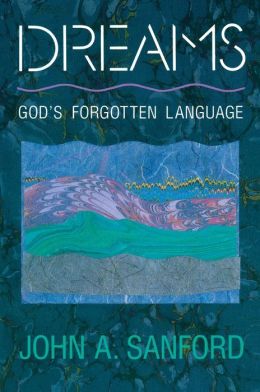
Today we will be baptizing little Lillian Grace, welcoming her into the fellowship of Christ and inviting her to grow in faith. In scripture one of the ways people grow in faith is to pay attention to their visions and dreams. Our modern problem is that we think faith has to do with creeds and religious observances, but faith is the uniting with God and allowing God to enter our daily lives, hopes, and dreams. At the end of next week I will be starting a course of instruction to better prepare me to help people realize God’s connection to them through the pre-conscious world of dreams. The course is based on Jungian Psychology and deep spiritual exploration. It will last until 2015 and we are using the money set aside for the sabbatical that I should have taken after my sixth year here. There will be 8 weeks of intensive classes at Camp Kanuga in the Mountains of North Carolina spread out over many months and a bunch of books, papers, workshops and consultations. Pat and I will do this together, and we hope to continue to grow in mind and spirit and, as with all Sabbaticals, we hope to enrich the spiritual life of the parish as well.
 
one of the books we will be using
A vision is the dream we share with God and is given to us when we see beyond the surface and go deeper into the world of the ground of our being. Usually we walk around like we have blinders on because our minds are so filled with the detritus of our daily lives - “What does that person think about me?”, “What is the next task I need to do?”, “What am I going to eat?”, “How much more stuff can I get?”, “What show is going on?”, - and on and on, and we miss so much of what is really there. We are so concerned with our own agendas that there is no room for that which is outside our own ego needs and desires. A vision is what God grants us to really see the world as God sees it. 

However, most of us do not want to have visions because they can disrupt our lives, get in the way of our own agendas. There is nothing wrong with that. For instance, last week I was driving back from Oklahoma, going 75 miles an hour on an interstate, and that was not a time I needed to have visions. I needed to focus on what the clown ahead of me was doing and what was going on in my blind spots, etc. But if I live my life as if I am hurtling down a highway, as if my destination is the center of the universe, then I am not aware of the rest of the universe. For our own sanity, spiritual and otherwise, we need to get back in touch with a deeper reality. Jesus, in today’s Gospel lesson, uses the image of  the servant who focuses in on the true meaning of his existence when he  advises "Be dressed for action and have your lamps lit; be like those who are waiting for their master to return from the wedding banquet, so that they may open the door for him as soon as he comes and knocks.”

God comes and knocks, offering visions of the deeper reality all the time, but we are so busy that we refuse to hear. Another reason we refuse to hear is that we have been disappointed with God, and we refuse to put up with anyone who has let us down. I went through that period of sulking over God not doing what I wanted for several years and acted like that old Fats Domino Song:
You went away and left me long time ago
Now you come back knockin' on my do'
I hear you knockin' but you can't come in
I hear you knockin', go back where you been
I begged ya not to go but you said goodbye
Now you come back tellin' all those lies
I hear you knockin' but you can't come in
I hear you knockin', go back where you been
If you had a-listened long time ago
You wouldn't be goin' from do' to do'
I hear you knockin' but you can't come in
I hear you knockin', go back where you been 
 
Fortunately we have to sleep sometimes and what happens there is that, when we dream, we start to listen to the divine knocking and, if we are lucky, we get visions. Sometime we get reactions to the pastrami and rye we ate before we went to bed or the nightmare of the upcoming test in the morning, but as we go deeper, we send our ego, which tries to protect us from God because it doesn’t want anything to change, out for a smoke. In dreams we start to connect back to the ground of our being and hear God speaking to us in order to bring us into wholeness. The dreams are usually in symbols and archetypes to get around our ego defenses and it takes a lot of work to figure out what is being said. Take Abram’s dream in the first lesson for example. “The word of the LORD came to Abram in a vision, ‘Do not be afraid, Abram, I am your shield.” 


What is a “shield”? In the 21st century we would tend to say that a shield is some sort of protection we hide behind to keep us from harm. So if we only stayed on the surface we would say that God is promising to protect Abram from all harm, and Abram can go on with his life undisturbed. Except there are two things wrong with that idea - (1) God does not just visit us to tell us that everything is hunky-dory and then leaves us alone, but God comes to transform us so that we might more fully live and deeply, spiritually participate in the Kingdom of the Heavens right here and right now; and (2) Abram did not live in the 21st century and the story was not written down in the 21st Century, so we need to go deeper. For Abram a shield is not something to hide behind but something to increase one’s power. First of all, a shield usually has a decoration, a symbol of you or your family or tribe, saying who you are - like a coat of arms. A Shield was how you defined yourself. God is saying “I am your shield,” and by that he means that “The deeper definition of who you truly are is by your relationship with me. Your life has a center other than yourself for you are my beloved child, the brother of all that has been created.”

Second of all, a shield is not meant to be hidden behind for a shield huge enough to hide behind would be unwieldy. A shield needed to be light enough to carry and strong enough to be of some protection. A larger shield, about 43 inches long, was developed in the early Roman Empire to be used to deflect slings and arrows, but that was more than a thousand years after the Bronze Age of Abram’s time. At that time a shield was either a wood, wicker, metal or animal hide disk that was used on the left arm or left hand, which is the weaker arm or hand if one is right handed, to strengthen that arm and to deflect any blow by turning the shield at an angle so that the sword of the enemy would slide off the shield. No shield, or shield arm, is strong enough to absorb a direct overhead blow, but tilting the shield or using the shield to push away puts the enemy off balance and the energy of the enemy is dissipated. When the vision says that God will be Abram’s shield, God is offering to help overcome Abram’s weaknesses and be Abram’s strength as he deal with the blows, slings, and arrows of life. God is not promising to be the guarantor that nothing bad will happen to Abram, but that God will transform Abram, enabling him to stand and participate more fully in the presence of God. To enter into a deeper relationship with God is to enter into new territory and, as an outward sign of that change, Abram’s name will be changed to Abraham.

God speaks to us in so many different ways, if we would only just stop and pay attention. Last week when we were in Tulsa, Oklahoma to visit Pat’s daughter, son-in law, and grandson (Nate the Great), we had occasion to go on an art crawl through the Brady Art district which is a reclaimed warehouse area. There was some very challenging work in all of the art galleries and studios, but the most meaningful moment was when we walked past a park called the “John Hope Franklin Reconciliation Park”. Franklin was a noted author and historian who ended his career teaching history at Duke. He was born and raised in Tulsa and was 6 years old at the time of the Tulsa Race Riots of 1921. 
 
The Riots began when a 19 year old African-American bootblack needed to visit the only black restroom in the area located on the 6th floor of a building, and he entered the elevator operated by a 17 year old white girl. Apparently he tripped and the girl screamed and, in response to her cries, he was arrested for assault and taken to jail. The girl refused to press charges, but an armed Klan inspired mob gathered to take him out to lynch him. The sheriff refused to turn him over, and in the meantime, a group of blacks from the area known as Greenwood armed themselves and went to defend the young man. A battle ensued and both white and black bodies littered the ground. In retaliation the mob grew and marched on Greenwood and burned the place to the ground, beating and killing whoever got in their way. The mob was aided by the National Guard which helped by rounding up 6000 blacks for detention and by dropping incendiary bombs from biplanes on Greenwood, burning the black hospital, churches, schools and every house. Franklin’s father, a lawyer and leader of the Black Community, called the relatives with whom John was visiting and told him and his sister not to take the train back to town. As a result of the riots, the sheriff was fired, the bootblack kicked out of town, Greenwood was razed, and a warehouse district was set up in its place which enriched a man named Brady who was one of the Klan leaders. Money did not purchase his happiness, and Brady later killed himself. Years later the warehouses were empty, and the Brady Street Art District was created. Tulsa tried to erase all memory of the event in its history and put blinders on so that the past could be put behind it and get back to business as usual. The problem is that unless we allow the shadows of ourselves to be brought to light and be transformed by the light of Christ, we tend to unconsciously pass on the repressed part of ourselves. The truism is that “What is not transformed is transmitted.”


Franklin, in one of his books, The Color Line, wrote, “Perhaps the first thing we need to do as a nation and as individual members of society is confront our past and see it for what it is.” Franklin died in 2009 but his foundation, helped by a special commission, the 2001 Oklahoma Commission to Study the Tulsa Race Riot of 1921, set aside a section of the old Greenwood area as a Reconciliation park. In the center, next to a labyrinth to walk for contemplation, there is a 25 foot Tower of Reconciliation showing the struggles of Tulsa to deal with the past injustices against the Native-American and African-American parts of our society. It is not a guilt monument, for the vision is the working together to create a just society where the content of character rather than the color of skin define a person. As I stopped I realized that the park was a way to call us to a new vision of the world where, in the words of the baptismal covenant we will recite, together we “strive for justice and peace among all people, and respect the dignity of every human being”. The vision, like all visions, is not the wallowing in the past, but a call to change the present and work for a new unexplored future.


Pay attention to the dreams and visions which God provides us to knock on the door of our consciousness, assuring us of the presence of the power greater than ourselves who is our shield as we move into a new future.