Thursday, September 19, 2013

A reflection on debts and debtors


A Reflection for XVIII Pentecost (Proper 20)                       All Saints’, Southern Shores, N.C.
 September 22, 2014                                                                        Thomas E. Wilson, Rector
Jeremiah 8:18-9:1                    1 Timothy 2:1-7                      Luke 16:1-13
As I was preparing for the Bible Study this week, I was looking at the Gospel lesson and, while I have preached on this lesson at least ten different times over my ordained ministry, I did not notice the word “debtor” before. I guess I was all intent on trying to find out why the Master commended the dishonest servant, and I passed right over the word. As I prayed about it, it seemed as if the scales fell from my eyes and, for a couple of hours, I had a wonderful time thinking I had cracked the code to the meaning of this passage because I finally noticed that word, “Debtor”. 

Let me explain; how many of you for your sins have been to a Presbyterian church? My mother was a Presbyterian and my grandparents took me to their Presbyterian church on their local college campus when my brother and I were palmed off on them for part of the summer so that my parents could regain some sanity. In their version of the Lord’s Prayer, the petition is “Forgive us our debts as we forgive our debtors”, while the Episcopalians used “Forgive us our sins as we forgive those who sin against us.” I had been told that “sin” meant not necessarily something bad but something that misses the mark and falls short of the target. I just figured that it was a disagreement in translation since to be in debt is also to fall short  I went back to my Greek concordance to back myself up, but that didn’t happen. Because while the words are synonymous, it is Matthew’s Gospel which uses the Greek word for debt and Luke’s Gospel that uses the Greek word for “sin”. 

However, I am not going to let an inconvenient surface fact get in the way of the truth. I want you to know that my Greek professor would disapprove of my playing fast and loose with the words of scripture, and my New Testament Professor is probably rolling over in his grave because the story of the “Dishonest Manager” is in Luke and not in Matthew, and it is not found in any of the other Greek manuscripts.  So I have not a shred of evidence to back me up.  But as Luther says in the 99th letter to Melanchthon,
"If you are a preacher of Grace, then preach a true, not a fictitious grace; if grace is true, you must bear a true and not a fictitious sin. God does not save people who are only fictitious sinners. Be a sinner and sin boldly, but believe and rejoice in Christ even more boldly. For he is victorious over sin, death, and the world. As long as we are here we have to sin. This life in not the dwelling place of righteousness but, as Peter says, we look for a new heavens and a new earth in which righteousness dwells. . . . Pray boldly-you too are a mighty sinner." (Weimar ed. vol. 2, p. 371; Letters I, "Luther's Works," American Ed., Vol 48. p. 281- 282)


Suppose that I looked at this story not as a recounting of fact, but as if it were a dream.  Come on, admit it.   You knew I was going to bring up dreams again. So for those of you picked five minutes in the “How long into the sermon will it take Tom to mention dreams?” pool, you can wait for a minute to collect your winnings or you could just write down that the names of the people who are in your debt. When we look at a dream, we understand it in symbols and that is the way to understand this story - as a parable, as Jesus’ story told in dream language to the right side of our brain.  

So this is not a story about economics.  In the parable the character of the Master is a stand-in for God, and in the imagination of my prayers, I understood that the word debtor meant sinners. The manager is you and me, we are the stewards of God, and we have all squandered opportunities for God’s Kingdom to come and for God’s will to be done on earth as in heaven. In my imagination I suppose that, in God’s Kingdom, forgiveness is the norm and my job is to forgive. Suppose in the books I keep in my heart I remember every sin that has been done against me, and in that ledger each person’s sin is added to their debt: they owe me!
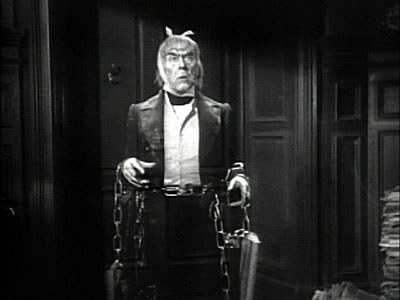
The image is like the ghost of Jacob Marley in Dickens’ A Christmas Carol, who comes to Scrooge bound in chains, chained for all eternity, “clasped about his middle. The chain was long, and wound about him like a tail; it was made, for Scrooge observed it closely, of cash-boxes, keys, padlocks, ledgers, deeds, and heavy purses wrought in steel." 

Suppose that every sin that has been done against me is also a sin against God and those offenders are in debt to, and owe, God. Suppose I realize that God is calling for an accounting of my internal books and ledgers, the ones I chain to my heart and memory. Suppose that I do not want to go before God with all that red ink on my soul, so I go to everyone who is in my books and forgive those parts of the sins I am able to forgive at this time, not because I am a good person - I am not - but out of my own self-interest, so I don’t have to go before God with all of my resentments. Suppose that the Master (God) comes to you and me and says, “You were acting shrewdly in your own self-interest just like all those other people who are not members of churches act in their own self-interest. Thank you for doing that for, as my servant John wrote in his Gospel, “the sins that you bind on earth are bound in heaven and the sins that you loose on earth are loosed in heaven.” 

Suppose that when I forgive, it is not just me that forgives but the God within me and you that forgives, and the sinner and I and you share the same sacred ground of our being. Just saying the words is not enough, but I must ask God to cleanse me from my resentment and to change my memory so that, the next time I remember the hurt that was inflicted, the feelings of anger will be replaced by sadness for the pain that I allowed to fester for so long, and I will delight that God gave me the strength to even want to want to forgive.  Suppose that is what we are called to do when we are called by the Master to answer for the ledgers that we have chained on ourselves. Suppose that is another way of looking at this story of cooking the books, burning away all of our burdens in the fire of God’s love.

Suppose instead of holding resentments and holding on to enemies, we pray for them in thanksgiving, as the writer of 1st Timothy for today urges:  First of all, then, I urge that supplications, prayers, intercessions, and thanksgivings be made for everyone, for kings and all who are in high positions, so that we may lead a quiet and peaceable life in all godliness and dignity.”

That is just supposing of course that Jesus taught us to forgive us our debts as we forgive our debtors as the Presbyterians and Matthew say it or sins as Episcopalians and Luke say it. Maybe it is just a dream, but suppose we took it seriously?

Thursday, September 12, 2013

A Reflection on connections

A Reflection for XVII Pentecost (Proper 19)                                    All Saints’, Southern Shores, NC September 15, 2013                                                                Thomas E. Wilson, Rector
Jeremiah 4:11-12, 22-28                1 Timothy 1:12-17                            Luke 15:1-10
Today we continue with Jeremiah’s dreams.  One of the problems with taking a look at prophets is that some interpreters want to see in prophecies predictions for the future.  They expect to see a threat by the Almighty to make a grease spot of the land by the abusive parent in the sky. The Linns’ (Shelia, Matthew and Dennis) book, Good Goats: Healing the Image of God,
addresses the difference between a loving parent and an abusive parent. Sometimes all parents get fed up with their kids and threaten something, like when my father was really ticked off with my brother and I constantly squabbling on the long car ride to the grandparents - “If you guys don’t cut it out, I am going to stop the car and let you walk home.” However, only the abusive parent will do it.   I lost count of the number of times we drove our father to frustration, but he never did stop loving us and drop us off on the highway.

A prophet is a “seer”, one who sees information through visions and dreams about the present reality. The dream comes and, in this case, is a nightmare because the people have been so undermining of the community with the evils of exploitation, unchecked greed, neglect of the poor, corruption of government, and abuse of the land.  They are alienated from neighbor, community, the land, and ultimately from the true self, the image of God who is in the depths of each of our being. There are consequences for this behavior; all behavior has consequences. Newton’s Third Law of Motion tells us, “For every action in nature there is an equal and opposite reaction.” The problem is that we think that somehow we are not all connected, and we are above nature and people. But as Bob Dylan used to say, “You don’t need to be a weatherman to see which way the wind blows.”

Jeremiah has a dream; it is a nightmare. Disturbing dreams come to shake us up, to have us pay attention and change the way we are living. This is a dream of alienation.  The alienation that we experience but repress, push down into our unconscious is projected onto the screen of our dreams so that we might come face to face with that which we have ignored. Healing comes when we recognize it and make a decision that we don’t want to live this way - lost in a world of alienation.

In the dream, Jeremiah hears the hot wind blow from the desert, laying the land and people low.
Jung had a concept of “synchronicity” which is when two or more events happen at the same time and while they are not caused by one another, they become connected in meaning.  Such as the experience of thinking about someone and then we get a phone call from them. One does not logically cause one another but we give meaning to it, giving them an acausal connection, where the connection is more important than the cause. Jeremiah’s dream from the Divine is pointing out the connections between the actions of the people and the land itself. Now, of course, we can get all defensive and say; “Don’t blame me for the weather. It is just a coincidence.” But from what we are learning about Quantum Physics, acausal connections is one way the universe works. The deeper we go what seems to be coincidental are seen to be incoincidental. The Eastern Religions call it Karma, the “what goes around, comes around” idea or what the Greeks call “fate”. However, we usually are so obsessed with our own entitlement philosophy that we do not perceive the evil that we do. Jung said, “When an inner situation is not made conscious, it appears outside as fate.” Jeremiah, the seer, by sharing his dream, is calling our deeds of thoughtless evil to our consciousness where we can see our actions the way that God sees them. He hears God calling through the dream that we can change this seemingly inevitable outcome, but we are going to have to change the way we act and rediscover our true connections with the land, with neighbor, and with our true selves, the true images of God buried under the inattention of our busy-ness.

I was listening to NPR this last week, and it was suggested that one of the contributing factors to the problems in Syria was the four year drought from 2006 - 2010 which dried up farms and forced 2-3 million people, now homeless, to pour into the cities. While the well-off, living in their own little bubble of privilege, were busily finding ways to profit from the misery, the government’s refusal to aid its citizens helped create the situation where desperate people rose up in revolt. The UN warned about possible unrest from this powder keg in 2009, but the regime acted as if greed is normal, violence appropriate to support their own privilege, and poor people were not their problem. It would be nice to say that we Western Christians respond to such situations out of love, but we are often too busy with our own agendas to pay attention to the world - and at home we act the same way, as if greed is normal, violence appropriate to support our own privilege, and the poor not our problem.

God keeps trying to get us to pay attention to the fact that we are intimately connected to the land, to neighbor, and to the true self that dwells in us, but we alienate ourselves from all of those.  In the Gospel story for today, Jesus looks at the two groups of people who act as if they are not connected with each other. On the one hand are the tax collectors and friends who work for the occupying forces. They had been alienated from their neighbor because they wanted to profit from the situation; but in the process they found that they were profoundly alienated from their true selves. They found that money and power could not feed their souls. Jesus came and, in his imagination from the Divine, he told stories which projected God’s loving persistence on the screen of their consciousness, and they found the strength to change and accept God’s love and hope.

On the other hand, there was a group of Pharisees who were so concerned about being “right” in religion that they were alienated from neighbor who did not measure up to their standards, so that they were also alienated from their true selves, the place where the Spirit of the living God dwells within each of us. The problem with being “right” is that we are so filled with ourselves that God doesn’t stand a chance of being heard.  Jesus, filled with the imagination of the Divine, tells a couple of stories about how the Shepherd goes into the wilderness and the woman goes into the dark spaces to recover that which was lost. The shepherd and woman are archetypes and metaphors for God who comes into the wilderness of our unconscious hidden selves and into the dark corners of our souls to help us find ourselves.
The writer of the 1st Timothy remembers Paul giving thanks to God for coming into Paul’s dark, alienated soul when he, unconsciously  was the lost sheep, the lost coin, obsessed with being right.  The Lord appeared in a vision, a dream, to project onto the screen of Paul’s consciousness the blindness of Paul’s vision. Paul sings “But I received mercy because I had acted ignorantly in unbelief, and the grace of our Lord overflowed for me with the faith and love that are in Christ Jesus.”

Jeremiah, Paul, the tax collectors and their friends all know what it is like to have God heal the alienation in their hearts and to have the chance to find the true self, the resting place of the divine who lives within and who hallows us, the land, and the sacred space between us and our neighbor - even the neighbor who is our enemy.

Today, I invite you to listen to the dreams of Jeremiah, the imagination of the divine in Jesus’ stories and the song of Paul and ask; “If it were my dream, if it were my story, if it were my song, will I claim it?” I remember a line the Bishop said at my ordination after I replied “I will” to a bunch of promises: “May the Lord who has given you the will to do these things give you the grace and power to perform them.” To which I responded “A-men”, which did not mean “Bed-de-bed-de that’s all folks”, but “I agree”.

 Now my brothers and sisters, I ask you to remember our own Baptismal Covenant,
on page 304 of the Book of Common Prayer:
Celebrant      Do you believe in God the Father?
People          I believe in God, the Father almighty,
                 creator of heaven and earth.
Celebrant      Do you believe in Jesus Christ, the Son of God?
People          I believe in Jesus Christ, his only Son, our Lord.
                    He was conceived by the power of the Holy Spirit
                        and born of the Virgin Mary.
                    He suffered under Pontius Pilate,
                        was crucified, died, and was buried.
                    He descended to the dead.
                    On the third day he rose again.
                    He ascended into heaven,
                        and is seated at the right hand of the Father.
                    He will come again to judge the living and the dead.

Celebrant
     Do you believe in God the Holy Spirit?
People          I believe in the Holy Spirit,
                    the holy catholic Church,
                    the communion of saints,
                    the forgiveness of sins,
                    the resurrection of the body,
                    and the life everlasting.
Celebrant      Will you continue in the apostles’ teaching and
                 fellowship, in the breaking of bread, and in the
                 prayers?
People          I will, with God’s help.
Celebrant      Will you persevere in resisting evil, and, whenever
                 you fall into sin, repent and return to the Lord?
People          I will, with God’s help.
 Celebrant     Will you proclaim by word and example the Good
                 News of God in Christ?
People          I will, with God’s help.
Celebrant      Will you seek and serve Christ in all persons, loving
                 your neighbor as yourself?
People          I will, with God’s help.
Celebrant      Will you strive for justice and peace among all
                 people, and respect the dignity of every human
                 being?
People          I will, with God’s help.
“May the Lord who has given you the will to do these things give you the grace and power to perform them.” To which the people said; …


Thursday, September 5, 2013

Another reflection on a dream from Jeremiah

A Reflection for XVI Pentecost (proper  18)             All Saints’ Church, Southern Shores, N.C. September 8, 2013                                                            Thomas E. Wilson, Rector

Jeremiah 18:1-11     Psalm 139:1-5, 12-17       Philemon 1-21         Luke 14:25-33

I warned you last week that I would continue looking for dreams in the lessons. Next month I will begin a series of classes where we will look at 14 dreams in scripture and how God used dreams as the way of communication with people. We will use a book by the Rev. Robert (Bob) Haden, a retired Episcopal Priest, who, after 30 years as a Parish Priest, left to become a full time Pastoral Counselor and Spiritual director using his Jungian training and Christian mystic exposure.
 

In Unopened Letters From God: Using Biblical Dreams To Unlock Nightly Dreams, Bob takes a look at 14 dreams and visions from Scripture, from Jacob’s ladder to Revelation, and invites readers to use the book as a beginning workbook to look at their own dreams. Bob considers dreams to be letters from God that we need to open to find out what the Divine has in mind for us for wholeness and healing. This class will be an opening for people who want to look at their own dreams in a group setting to uncover messages from God in their daily lives.


When examining dreams in such a setting, they are looked at within the context of a group of basic assumptions. Jeremy Taylor offers the following insights from his DreamWork Toolkit
(http://www.jeremytaylor.com/dream_work/dream_work_toolkit/index.html) :

One:    All dreams speak a universal language and come in the service of health and wholeness. There is no such thing as a "bad dream" -- only dreams that sometimes take a dramatically negative form in order to grab our attention.


Two:   Only the dreamer can say with any certainty what meanings his or her dream may have. This certainty usually comes in the form of a wordless "aha!" of recognition. This "aha" is a function of memory, and is the only reliable touchstone of dream work.


Three: There is no such thing as a dream with only one meaning. All dreams and dream images are "overdetermined," and have multiple meanings and layers of significance.


Four:  No dreams come just to tell you what you already know. All dreams break new ground and invite you to new understandings and insights.


Five:    When talking to others about their dreams, it is both wise and polite to preface your remarks with words to the effect of "if it were my dream...," and to keep this commentary in the first person as much as possible. This means that even relatively challenging comments can be made in such a way that the dreamer may actually be able to hear and internalize them. It also can become a profound psycho-spiritual discipline -- "walking a mile in your neighbor's moccasins."

Of the 14 dreams and visions, the one we have today in the book of Jeremiah is not in Bob’s book. The first step we must take is to understand what is going on in the dreamer’s life. As I told you last week, everything is falling apart for Jeremiah. The country he loves is being dismantled, the holy places are being ripped apart, and the people of Jerusalem wonder why God seems to have deserted them. It feels as if they are all alone. Jeremiah feels that way especially when he wanders over the ruins of the Temple and when he is tossed into a pit. Part of him wants to give up - and I’ll ask you to stop for a moment and try to remember if there has been any time in your life when you felt discouraged and that there was nothing but emptiness in this religion stuff.   Was there a time when you really understood the words of that old Don McLean song American Pie:

I went down to the sacred store
Where I'd heard the music years before
But the man there said the music wouldn't play
And in the streets the children screamed
The lovers cried, and the poets dreamed
But not a word was spoken
The church bells all were broken
And the three men I admire most-
the Father, Son, and the Holy Ghost-
They caught the last train for the coast
The day the music died
And they were singing
Bye, bye Miss American Pie
Drove my Chevy to the levee but the levee was dry
Them good ole boys were drinking whiskey in Rye
Singin' this'll be the day that I die
This'll be the day that I die

You got an idea of how it feels to be in that place? Jeremiah wants to just lay his body down and die; get it all over with. He sees no other option. God comes to Jeremiah in his brokenness and speaks to him in dreams and visions, which Jeremiah unpacks and presents to the people. 

In this dream God takes him to a house of a person who fashions pots. Some of you may have seen a potter at work at a potter’s wheel - the wet piece of clay is placed on the center, and as the wheel goes around, the potter guides the clay into the shape of a pot or bowl. There are two things the potter needs to do: (1) keep control of his or her  own hands, as every move is deliberate and gentle as the clay is manipulated to create something new, and (b) the potter needs to know, understand, and respect the clay for it is a partnership in creation. 


I remember in Seminary when I was trying to “throw” a pot on the wheel in one of those vain attempts to get me out of my rational left brain mindset and into the right brain creative view. I would get so upset because I could never keep my hands perfectly aligned, and I wanted to get it over quickly to prove mastery. Except the more I would rush, the whole thing would get out of balance and turn into a mess. My instructor would smile and I would apologize, but he said to me, “Just dampen it down and start over. Messing up is how you learn.”

In the dream, the Potter messes up. Remember, the point of looking at the dream is not to analyze it as an object to be studied, but to form a relationship with the dream and the sender of the dream, I am taking Jeremiah’s dream and making it my own; living into it. If it were my dream, in the dream I hear God saying; “We can start over again and I will help guide your hands. As we work together to shape a new life, a new community, a new relationship.” The potter is gentle and has all the time in the world, for all things are redeemed and the potter knows the clay. The Psalmist for today hears God singing to her in a dream and writes,
1 LORD, you have searched me out and known me; *
you know my sitting down and my rising up;
you discern my thoughts from afar.
2 You trace my journeys and my resting-places *
and are acquainted with all my ways.
3 Indeed, there is not a word on my lips, *
but you, O LORD, know it altogether.
4 You press upon me behind and before *
and lay your hand upon me.

The Psalmist’s dream informs me about Jeremiah’s dream, that God knows me and wants what is best for me. In my dream, I would see all of the bad things that were about to happen as part of the labor pains of a new birth. Whenever I louse up in my life - and I do it often - there are consequences for my actions, for there are never actions without consequences. This dream helps me hear that God is constantly working with the lump of clay that I am, and gently, lovingly transforming me into a work of art and useful vessel. I feel God’s hand laying on me, pressing me behind and before, and as God knows and loves me so intimately, so may I also know and love God intimately.

Everybody’s dream is their own, and it has meaning for them.  One of the things we don’t do in dream groups is tell someone that their dream definitely means this or that. What we say is, “If this were my dream, this is what it would mean to me.”  Jeremiah has shared with you a dream he had 2500 years ago. You have heard it. You know what is going on in his life, living in a time when everything seems to be falling apart. This dream may resonate with you. I ask each of you to take a look at this dream and enter into relationship with it, and go through an exercise where you share with God and another human being, “If this were my dream…”

Thursday, August 29, 2013

A Reflection on living into the dreams we share with God


A Sermon for XV Pentecost (Proper 17)                    All Saints’ Church, Southern Shores, NC September 1, 2013                                                            Thomas E. Wilson, Rector

I just got back from the five day Dream Group Leader Training, the first training intensive session that will stretch out over the next two years. The training for Pat and I is being paid for by the money that was set aside for my Sabbatical which I should have taken four years ago. I want you to get your money’s worth, so you know I am going to see a dream in the lessons for today. Surprise, surprise; I find it in the first lesson from today’s lectionary.

Jeremiah had a dream, a vision, where God speaks to him and he shares an overview of that dream. Everything is falling apart for the Southern Kingdom - the rich have corrupted the whole society, justice is a joke, the poor are oppressed, and the country, rotten to the core, is an easy target for an aggressive adversary.  And that adversary appears - the Babylonians. The destruction is in two parts; first is the military victory over the demoralized army (you cannot expect your army to defend you if you exploit most of the soldiers and their families), then the Babylonians set up a puppet government and continue to crush the people. The occupiers have looted the Temple, and when the puppet government tries to revolt, the Babylonians totally destroy the temple and tear down the walls of Jerusalem as they take the people into exile. The people enter into deep darkness and in their well of depression ask, “Where is our God?”

Jeremiah has a dream, a vision, and in the dream he returns to the shared sacred memory of his people, the Exodus experience seven hundred years before. In the Exodus, the Hebrew children went through the wilderness, finding that the Divine was living in their daily lives, so much so that they considered themselves God’s people.  God’s spirit was in every breath they took as they walked in the wilderness toward a promise of being totally united with the Divine. But as they came to the Promised Land, they put the Divine to one side and said that they “could take it from here”. They made God a religion that they could put into use in certain “Holy” times and places, and they got around to doing the business of putting themselves in the center of the universe and the Divine at the periphery. The memory of who they were in relation to God was repressed.  They kept the outward trappings but ignored the heart. As Jeremiah remembers, the people and the leaders all stopped asking, “Where is God?”, because they had made God so small and irrelevant that they no longer really felt God’s presence. Jeremiah hears God say:

But my people have changed their glory for something that does not profit. Be appalled, O heavens, at this, be shocked, be utterly desolate, says the LORD, for my people have committed two evils: they have forsaken me, the fountain of living water, and dug out cisterns for themselves, cracked cisterns that can hold no water.

Jeremiah’s dream is God asking God’s people to remember who they are - they are people who have a relationship with God that is readily apparent if they would only open their imaginations and hearts.

The darkness of the people of God in Jeremiah’s day is similar to our darkness in our day. We have squandered our relationship with God and relegated the Divine to buildings and schedules. Yet, we can begin to rebuild if we, like Jeremiah, can return to our imaginations, our memories, and our dreams. Since we are already in darkness, the way we find light is to really enter the darkness. There is a poem we looked at during the Dream Leaders Training- I told you I would bring it back up. The poet is David Whyte an English Poet who lives in Washington State.  The poem is called Sweet Darkness and it comes from one of his collections called House of Belonging

When your eyes are tired
the world is tired also.
When your vision has gone
no part of the world can find you.
Time to go into the dark
where the night has eyes
to recognize its own.
There you can be sure
you are not beyond love.
The dark will be your womb tonight.
The night will give you a horizon
further than you can see.
You must learn one thing:
the world was made to be free in.
Give up all the other worlds
except the one to which you belong.
Sometimes it takes darkness and the sweet
confinement of your aloneness to learn
anything or anyone
that does not bring you alive
is too small for you.

When our eyes are tired from busily looking at the world through the narrow center of our personal universe, we need to close them to dream and see vision in order to hear the Ground of our Being. 


One of the exercises presented by one of our instructors, Jerry Wright, a former Baptist Pastor and now a Jungian Analyst, was to imagine the past 14 billion years as a 12 month cycle where each month was 1.25 Billion years. Why 14 Billion?  We think that is when the Big Bang happened, (let’s say in January) that explosion of energy out of which the creation we know began. In that energy explosion, our scripture tells us that God spoke and let creation be in that first hour. Our science tells us that all the atoms in our cellular makeup, in every piece of matter, carry the fingerprint of that expression of power. Our faith tells us that all matter coming from God contains the Spirit of God within it, as we proclaim when we say: “All things come from Thee, O Lord, and of thine own have we given thee.”  The scientist Carl Sagan echoes “We are made of star stuff.” The Paleontologist/ Priest/Mystic Pierre Teilhard de Chardin said: "We are not human beings having a spiritual experience. We are spiritual beings having a human experience."  We, the world, the universe, are spirit-filled. The problem is that we tend to make a distinction between this “real” (in quotes) world and the spiritual world, between soul and body, between heaven and earth, when they are really distinctions without differences.

Using the monthly calendar metaphor, February is when the “allurement” of gravity causes galaxies to form. In the month of September, our Galaxy, the Milky Way, one of a hundred million galaxies, is formed. In the metaphorical month of December, where each day is 40 million years, on December 31st, at 11:53 PM, the beginnings of human reflective consciousness bring us to see ourselves not as controlled by our instincts but as part of something deeper as we have the development of Homo Sapiens (Sapiens meaning wisdom), about 250,000 years ago. 40,000 years ago these homo sapiens in the Ice Age reflect on the nature and meaning of their existence in drawings on the cave walls, not of the food they eat which was reindeer, whose bones are found in the cave, but of realistically painted buffalo and horses which they did not eat but held in some regard outside the daily struggle. At 11:59:53 we have the beginnings of religion with rituals and codified approaches to the numinous. 

At 11:59:55 we have Jeremiah in the 6th century BCE - in the middle of that time that historian Will Durant called  “The Shower of Stars” and Philosopher Karl Jaspers called the “Axial Age” - with Amos, Hosea, Isaiah, Micah in Israel, Heraclites in Ephesus, the Buddha and the Upanishads in India, the Tao in China, Plato and Aristotle in Greece,  when we moved away from local Gods and tribal spirits to universal energies, which we differed in name, but were approached in awe and humility.

Jesus, at 11:59:56 cited in the Gospel lesson for today, reminds of the need for humility when the people at the banquet try to separate themselves based on social rank. This reflects the core of his ministry in which he shows us how to live fully into the material and spiritual at the same time and calls us to live in the Kingdom of the Heavens right here and right now. He invites every one of us to live into the reality of all of us, being fully human and fully spiritual, children of God, brothers and sisters of Christ.  Luke remembers Jesus in his confrontation with the Pharisees “And when he was demanded of the Pharisees, when the kingdom of God should come, he answered them and said, The kingdom of God cometh not with observation: Neither shall they say, Lo here! or, lo there! for, behold, the kingdom of God is within you.”

Guttenberg’s Printing Press comes to us at 11:59:59 so all of us could read the scripture for ourselves, and we are reminded how many dreams God uses to speak to us. However, reading takes us to the left side of the brain where our rational mind takes over and, as a result, we got used to preforming the great heresy of seeing God in the third person as he, him, it, as if God was not present but somewhere else to be studied and picked apart rather than the 2nd person subject of you and thou with whom to form a relationship. With only of a quarter of a second of metaphorical time to go until today, Freud and Jung, a hundred years ago, start studying the unconscious. Jung posited that we are all connected to each other from the beginning of time until today in what he called the “Collective Unconscious.”  He said: “The Collective Unconscious” contains the whole spiritual heritage of (hu)mankind’s evolution, born anew in the brain structure of every individual.” We believe that the divine is calling us out of that collective unconscious and speaks to us in symbols and archetypes. As Jung wrote: “In each of us there is another whom we do know (who) speaks to us in dreams, and tells us how differently it sees us from the way we see ourselves.”

Dr. King in his “I have a Dream” speech fifty years ago last week said:
We are tied together in the single garment of destiny, caught in an inescapable network of mutuality. And whatever affects one directly affects all indirectly. For some strange reason I can never be what I ought to be until you are what you ought to be. And you can never be what you ought to be until I am what I ought to be. This is the way God’s universe is made; this is the way it is structured.” 

The writer of the Hebrews lesson for today speaks of entertaining angels without knowing it. Angels are messengers from that which we call God, and we think they are “out there” some place, but I would suggest that we entertain angels every day when we change our vision to see ourselves “tied together in the single garment of our destiny” in the sacred space between and in us, and every night when we dream and make a plan to welcome God’s messages from the depths of our Psyche where spirit and matter are one, and to honor and remember our nightly guests. As the Psalmist for today sings: Oh, that my people would listen to me! * that Israel would walk in my ways!