Saturday, November 30, 2013

Being a "see-er"

A Reflection for I Advent All Saints’ Church, Southern Shores, NC December 1, 2013 Thomas E. Wilson, Rector
I have returned to my winter habit and have grown a beard. I first grew a beard so I would look older when I was 17 and a college freshman at Chapel Hill. If the sun hit it just right, you might be able to see some fuzz. The next year, when I got a summer job at an Outdoor Drama in Florida, I was cast as a Spanish Conquistador and I was able to grow a full red beard. It indeed made me look older, but dang!! - a beard can be hot in Florida summers. So I decided that I would only grow one during the winter. The problem now is that the red is gone from my hair and beard and they are both snow white. I went to visit a parishioner last week who had a toddler grandson visiting, and when I rang the doorbell, he came to the door, his eyes full of astonishment, and he cried out “Santa Claus is at the door!” Our parishioner grew in the estimation of his grandson who believed that his grandfather was close friends with Santa Claus. I tried to dissuade him, but he stubbornly held on to the illusion. However, as he grows up, he will realize that I am not Santa Claus, and he will see the truth that I am a friend of his grandfather and then grow into his own dreams. That is what life is about - getting rid of illusions by seeing the truth and then living into one’s dreams.

The Hebrew Testament lesson is from the 2nd chapter of the Book of the prophet Isaiah. A prophet is a “seer”- one who sees things and tells the truth about them, and then sees the dreams God has and point us in the direction of the fulfillment of those dreams. The first thing Isaiah does is to strip away the illusions and speak the truth as God sees things, and he starts chapter one of the Book by pointing out to the people the truth behind their facades when they come to worship. Listen to how the translation of The Message reflects what Isaiah says that God sees:
Quit your worship charades.
    I can’t stand your trivial religious games:
Monthly conferences, weekly Sabbaths, special meetings—
    meetings, meetings, meetings—I can’t stand one more!
Meetings for this, meetings for that. I hate them!
    You’ve worn me out!
I’m sick of your religion, religion, religion,
    while you go right on sinning.
When you put on your next prayer-performance,
    I’ll be looking the other way.
No matter how long or loud or often you pray,
    I’ll not be listening.
And do you know why? Because you’ve been tearing
    people to pieces, and your hands are bloody.
Go home and wash up.
    Clean up your act (12-17). . . . (and)
Oh! Can you believe it? The chaste city
    has become a whore!
She was once all justice,
    everyone living as good neighbors,
And now they’re all
    at one another’s throats.
Your coins are all counterfeits.
    Your wine is watered down.
Your leaders are turncoats
    who keep company with crooks.
They sell themselves to the highest bidder
    and grab anything not nailed down.
They never stand up for the homeless,
    never stick up for the defenseless. (21-23)
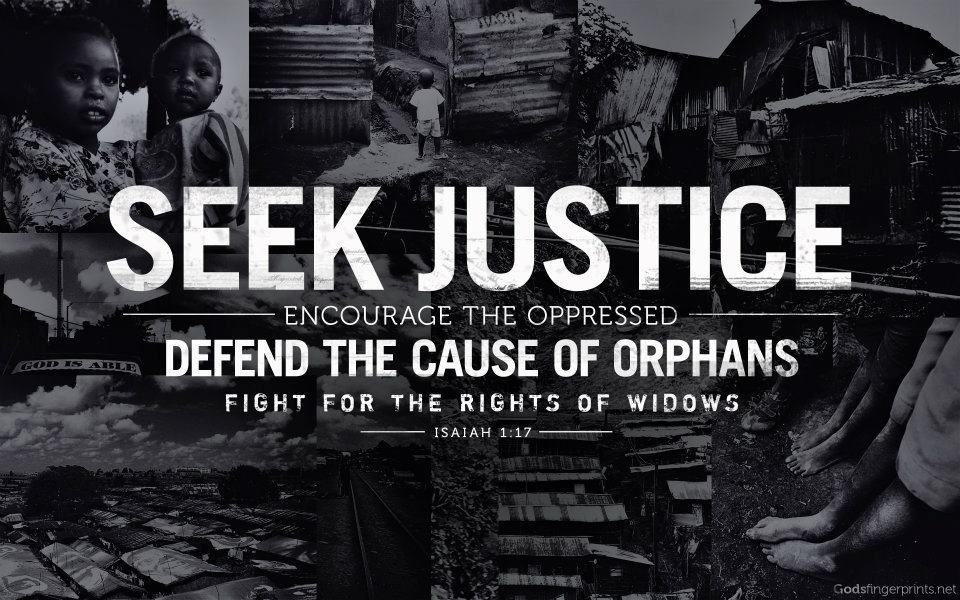
Any of that vision of the truth sounds familiar to you? Isaiah is speaking the truth in the 8th Century BC, and here we are in the 21st Century and it sure sounds like the here and now with our love of violence as we tear people apart with words or weapons, our inequality of wealth brought about by greed and the exploitation of the poor and marginalized, and the sale of our leaders to the highest bidders.

The second job of the prophet after stripping us of our illusions is to paint a vision of how God would like to see us, and here in the second chapter we see those who follow God beating swords into plowshares, spears into pruning hooks, and people no longer studying war. The prophet is a see-er who sees the truth behind the lies we live and also sees the dreams God has for us. Two weeks ago I woke up from a dream with an old 1950’s song written by Ed McCurdy rattling around in my head, and I realized why this week when I looked at the lessons. You may have heard the song (we used to sing it in peace demonstrations back when I had a red beard) “Last Night I Had The Strangest Dream”:
Last night I had the strangest dream
I ever dreamed before
I dreamed the world had all agreed
To put an end to war
I dreamed I saw a mighty room
The room was filled with men
And the paper they were signing said
They'd never fight again
And when the papers all were signed
And a million copies made
They all joined hands and bowed their heads
And grateful prayers were prayed
And the people in the streets below
Were dancing round and round
And guns and swords and uniforms
Were scattered on the ground
Last night I had the strangest dream
I ever dreamed before
I dreamed the world had all agreed 
To put an end to war
How many lies we tell ourselves and others to justify war. Wars end when we rid ourselves of our greed to possess what our neighbor has. The beginning of the end of war is me renouncing greed on a daily basis. Wars end when we stop glorifying violence. The beginning of the end of war is me renouncing violence on a daily basis. How many hours are we watching movies, television, and playing video games which teach us the joy of killing people for our own advantage? The beginning of the end of war is me renouncing the learning of war on a daily basis. How much money do we spend on weapons both as a nation and as individuals? In two weeks we remember the one-year anniversary of a disturbed young man, who spent hours on end playing violence-glorifying games, arming himself with weapons of mass destruction and going forth to live into his fantasy by slaughtering little children. We were appalled - and then we lost our nerve for we did not want to divorce ourselves from violence and weapons. Wars end when we give up our love affair with weapons. The beginning of the end of war is me renouncing weapons on a daily basis. How many times do we brood about revenge? Wars end when we rid ourselves of the desire to get even. The beginning of the end of war is me renouncing revenge on a daily basis.

The means for achieving turning swords into plowshares is simple, not easy but simple; we just lack the will to try to live into God’s dream for us. Living into the peace of God which was proclaimed was not attempted and found impossible; it was just found difficult and not attempted. Every week we proclaim in the Creed that we expect the return of Christ. This Advent I invite you to be a see-er and ask for the Risen Christ to return and give us the will to do what he asks. As the Gospel reminds us: “Therefore you also must be ready, for the Son of Man is coming at an unexpected hour."


Wednesday, November 20, 2013

Song of Zechariah - A Father For His Son


A Reflection for the Feast of Christ the King                         All Saints’ Church, Southern Shores, NC November 24, 2013                                                                        Thomas E. Wilson, Rector

Jeremiah 23:1-6                                Canticle 16 (Luke 1: 68-79)            Colossians 1:11-20          Luke 23:33-43

this is alo on youtube at : http://www.youtube.com/watch?v=tppF5TyEKMY&feature=youtu.be
 

The ancient Song of Zechariah, called the Benedictus Domininus Deus , which is Latin for the first line “Blessed be the Lord God”, is a song of Thanksgiving sung by a Priest to his child at the beginning of Luke’s Gospel. It has two parts; the first is the Thanksgiving for what God has done, is doing and will do for God’s people, and the second part is the sharing of the dream the father has for the child.


One of the high points of the Sunday service for me is when I snatch a baby from the arms of the parents as they come up for communion and hold the child as I continue to hand out the bread. Then I share the dream I have for this child with him or her as we return to the parents. Part of why I do this has to do with parent/grandparent withdrawal since I can no longer pick up my baby and grandbabies any more because they live far away - and they’re too big. I used to hold my baby - she is now 43 - in that first year of her life when she would wake up and cry or when I would rock her and feed her and I would talk to her about my dreams for her. Of course she did not understand any of the words I said, but I wanted her to know the holy space between, over, under, and through what the words could not express about how much she was loved. 


Zechariah is a faithful old Priest. The idea of Priesthood began in the wilderness of Sinai as the people coming out of slavery in Egypt made a covenant with God, and God declared to Moses in Exodus:

And Moses went up to God, and the LORD called to him out of the mountain, saying, Thus shall you say to the house of Jacob, and tell the children of Israel; You have seen what I did to the Egyptians, and how I bore you on eagles' wings, and brought you to myself. Now therefore, if you will obey my voice indeed, and keep my covenant, then you shall be a peculiar treasure to me above all people: for all the earth is mine: And you shall be to me a kingdom of priests, and an holy nation. These are the words which you shall speak to the children of Israel.


Over the centuries, the people decided to pursue their own agendas and outsource the work of being a Priest and to give the work of ruling to Kings. Kings and Priests had the same four-fold task:  (1) to help people connect to God, (2) to declare forgiveness, (3) to minister to those who are in the shadow of darkness and (4) to guide people into a life of peace. The passage from Jeremiah for today bemoans how those chosen priests and Kings have been false shepherds who have abandoned their responsibility and worked only for their own agendas. The Kings and Priests exploited the people, led them into wars, and built palaces to separate rulers and their cronies from their people. 


There are notable exceptions, like Zechariah, who lives in the hill country of Judea with his wife Elizabeth. He is on the Rota of Priests who come in to work at the Temple helping people with their prayers and offerings. His name means “Yahweh, the God remembers”, and I imagine him with his heart breaking when a couple asks for prayers for a child, feeling that God seems to have forgotten the similar prayers that he and Elizabeth repeatedly offered up, for they are childless. 

The Temple is full of false shepherds and corruption is rampant, but there are those like Zechariah who stay faithful to the four-fold task of being a priest at God’s altar.  

One day as he is attending to his duty in the sanctuary, the Angel Gabriel comes to him and tells him that he will be part of “raising up a mighty horn of salvation in the house of David”.  This is the literal Greek translation, but the metaphor sounds funny in English, so the translators changed it to “raise up a mighty savior in the house of David”.  Zechariah is so overcome that he cannot speak. The Temple administration puts him on disability because he cannot perform the ceremonies.  I think Luke’s Gospel remembers this detail to be a symbol that the Temple and its hierarchy are no longer really able to proclaim the love of God and that a new way of communicating God’s love must be found. There needs to be a new kingdom of priests for a new covenant with God, and Gabriel is telling Zechariah that he will have a son who will grow up to be the trumpet announcing the coming of the King, the new Priest, Jesus. This is the vision, the dream that God has given to Zechariah, that his son is going to be John the Baptizer. In the song Zechariah sings, he devotes his son’s life to the four-fold task of being a priest, but outside the Temple structure: (1) to declare freedom to live in loving communion with God without fear, (2) to proclaim the forgiveness of sins, (3) to show the tender compassion of God who shines light on those who dwell in darkness and the shadow of death, and (4) to guide feet into the way of peace. 

The medium becomes the message as John the Baptizer grows in a house of love and then becomes a messenger of God’s love in this broken world, far away from the false shepherds of the Temple.

John the Baptizer is to pour out his life for the sake of the love he sees in his cousin Jesus, the fulfillment of that love. Jesus will continue the task of being the embodiment of that love, the four-fold  sign of the new Kingdom of God - loving communion with the divine, forgiveness, compassion for those in shadow, and the presence of the peace that passes all understanding. Like John, Jesus will make enemies with those who profit from alienation, guilt, self-centeredness, and conflict, and they will work against Jesus and will kill him as we see in the Gospel lesson for today.


Luke remembers the story of the crucifixion and shows how Jesus on the cross demonstrates what a priest and King looks like in the new Kingdom of Christ:
(1) Jesus is raised up. Kings and Priests are usually raised up to positions of honor and given wonderful robes to wear, but Jesus is stripped and is vulnerable and is raised up on the cross to a place of shame. The norm for the new Kingdom of Christ is that we are not to exalt ourselves, but to become vulnerable, entering into loving communion with God and the brokenness of God’s people. 

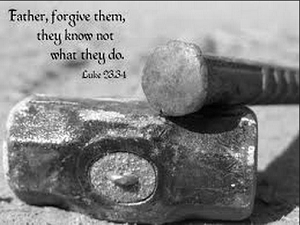
(2) Jesus declares forgiveness. Kings and Priests are used to handing out sentences of punishment, but Jesus forgives those who crucify him. The norm for the new Kingdom of Christ is to live and die with forgiveness on our lips and in our hearts. 


3)  Jesus turns in compassion to the thief and all others who live in darkness. After he dies he enters into the place of darkness and brings God light to those who dwell in the darkness. The norm of the new Kingdom of Christ is to shine the light of Christ into all the darkness. 

(4) Jesus commends his spirit to God on the day of his death as he has done every day of his life. The norm of the new Kingdom of Christ is about living our lives in 100% stewardship of all that we have received: “All things come from thee O Lord, and of thine own have we given thee.”


Christ shows us what a true King and a true Priest look like. He remains our King, and all of us are Priests  in that new Kingdom. In 1st Peter we are reminded: “But you are a chosen people, a royal priesthood, a holy nation, God's special possession, that you may declare the praises of him who called you out of darkness into his wonderful light.” John, in the book of his dreams of Revelation, drives home the point: “and He has made us to be a kingdom, priests to His God and Father-- to Him be the glory and the dominion forever and ever. Amen.”


This next week we will begin Advent, and I ask you, fellow Priests, to join with me as we prepare the way for the King to rule in our hearts at Christmas and every day. A suggestion is that each of you start by holding a small child in your heart, and then tell them of what you believe God’s dream is for them. Then listen to what Christ is whispering to you.

Thursday, November 14, 2013

Finding strength in a shattered world

On video at http://www.youtube.com/watch?v=S7pyli89huk&feature=youtu.be


A Sermon for XXVI Pentecost (Proper 28)                  All Saints' Church, Southern Shores, NC November 17, 2013                                                  Thomas E. Wilson, Rector
Isaiah 65:17-25                  2 Thessalonians 3:6-13                  Luke 21:5-19
Last week I talked about the differences between living in a world that seems shaken and living in a world that seems gently stirred, and now I want to take a look at living in a world that seems shattered. In my daily Morning Prayer, the Lord gave me a memory of the end of the service and Paul’s advice to the Ephesians: “Now to God who by the power at work within us is able to accomplish abundantly far more than all we can ask or imagine, to God be glory in the church and in Christ Jesus to all generations, forever and ever. Amen.” (3:20, 21)

 
The lessons for today are about living in a world that has been shattered. In the Hebrew Testament lesson from Isaiah, the people have come back from exile and they find total devastation. The walls which protect them are gone, the Temple is destroyed, and property claims are all sorts of confused because other families have taken over abandoned homes and fields. There is a complete void in their lives, and as their entire community will need to be rebuilt, there is a fear that the void will never be filled. In response to the fear brought on by this shattered sight, Isaiah has a vision, a dream of the community coming together and opening themselves to their re-creation by God in this place. The vision depicts something greater than merely returning to normal. Isaiah’s God dares to pass on a greater vision where God’s peace will flow through the people and their neighbors and enemies and then into the lands and environment where even, as he sings: “The wolf and the lamb shall feed together, the lion shall eat straw like the ox; but the serpent-- its food shall be dust! They shall not hurt or destroy on all my holy mountain, says the LORD.”  In Isaiah’s vision, the shattering is the beginning of something new, which is greater than they can ask or imagine.

When Paul writes to the Thessalonians in today’s lesson, he sees some giving up hope in the face of what they believe is the shattering of their lives, and he urges them to gather together as a community, as a community of hope, to live into a new vision. 

In the Gospel lesson Jesus warns of the time of devastation to come. It did not take special vision to see that the Romans would sooner or later lose patience with this rebellious province. There is the old piece of advice about “reading the Bible with one hand and the New York Times with the other”.  It is a metaphor for the way Jesus understood the world, that he paid attention to the Spirit of God and to the undercurrents of the events of the world at the same time.  Luke’s Gospel is written because the Jesus movement remembers Jesus warning them of how the Temple would be destroyed - and they had seen it happen. The Gospel, the good news, sees this catastrophe as the beginning of something greater than they can imagine. There is a difference between hope and wishful thinking.  Wishful thinking is ignoring the facts of the present and portents of the future, whereas hope is the trusting in God’s help and strength in the middle of the harsh facts and portents.  Wishful thinking is the closing of eyes and crossing of fingers, whereas hope is the joining together of hands and building a new community together.

 We have only to look at our major news stories this past week for examples of the lesson from the Gospel. We saw the Typhoon smash through the Philippines and devastate the islands. The country has been shattered, and it will take the world community to come together to try to fill the void caused by the entire destruction of the infrastructure and the critical need for food and clean water.

Maybe it was a coincidence (I prefer to see it as synchronicity), but this week in my Netflix mailing, I received two movies of shattering, movies I had chosen months ago. One movie was Fill the Void,
an Israeli movie in Hebrew of a family of the ultra-Orthodox Haredi sect in modern Tel Aviv in Israel. The family is happy and the 18 year old girl, Shira, looks forward to upcoming negotiations for an arranged marriage, until the night of the festival of Purim when the Biblical story of Esther is remembered. On that night at the family gathering, Shira’s pregnant older sister, who is named Esther, goes into labor and dies in childbirth. The family is devastated and the wedding plans for Shira are put off, and in their grief, they focus on Esther’s child, Mordechai, who the widower Yochay brings over to the family house for them to look after. Shira’s life is destroyed because a woman in an ultra-Orthodox home is considered pitiable if she is not married. It is a beautiful film of a small disaster of smashed lives in which broken individuals and the community faithfully come together in loving self-sacrifice and fill the void -and not just fill the void, but create something greater than can be asked or imagined.

The second movie really relates to the disaster of nature. The Impossible, a 2012 Spanish film directed by Juan Antonio Bayano, is based on a true story about a Spanish family on vacation nine years ago at a resort on the coast of Thailand when a tsunami hit. It recounts how they were tossed by the waves, ripped apart by the force and, due to the collapse of the area’s infrastructure, unable to find each other until the end.
In order to get more money from American audiences, the family’s nationality and language was changed to English. It focused on the short time this privileged family had to endure living in a smashed area and how, in the end, they got on a plane paid for by the insurance company and, flying high above the devastation with no thoughts about how the natives would survive, they returned to their home. Those quibbles aside, the movie is very realistic and challenges viewers to imagine how they would react in similar circumstances.  The family represented is overwhelmed, yet in the middle of the disaster, they interrupt their own struggle and work to help others. They come together at a deeper level when they reach outside of their own desperate needs and minister to the similarly suffering.

These are disasters clear across the globe and yet they are universal. We are all vulnerable to death and nature. The second movie had a special resonance with its focus on people who are in a beautiful and vulnerable place where a freak event could wipe out everything they know. Sound familiar to us on the Outer Banks? If not, please look at the projections of what Southern Shores will look like with just a one foot increase in sea level and a storm surge, which can be found at

and then type in the zip code- in our case 27949

 Let us just say that Duck Woods Golf Course will have a beauty of a water hazard, and we would have to swim the labyrinth. But let us go one step further - now combine that with an off-shore earthquake! What would happen if this church building was shattered and destroyed? What would happen if the resulting tsunami with a thirty foot wave just ripped through these walls, and the Baptismal font, pianos, organ, my office, even me, the Rector, and all the outward signs of the religious institution got swept into the middle of the sound? Would the church itself be destroyed? I think the institution would be shattered, but my hope is that All Saints’ would gather together and hold hands and turn to the power greater than ourselves - and see and work for a vision that is greater than we could ask or imagine in helping our neighbors. The work of the church is not about trusting in people, places, and things but about honoring the Holy Space between us as God is working within and between us for a new creation.

We live in a world that is filled with minor and major shatterings, and we cannot keep them from happening.  But we can gather together and hold hands and turn to the power greater than ourselves, see and work for a vision that is greater, and sing “Now to God who by the power at work within us is able to accomplish abundantly far more than all we can ask or imagine, to God be glory in the church and in Christ Jesus to all generations, forever and ever. Amen.”


Friday, November 8, 2013

Shaken Not Stirred A Reflection for XXV Pentecost


A Reflection for XXV Pentecost (proper 27) All Saints’ Church, Southern Shores, NC November 10, 2013 Thomas E. Wilson, Rector
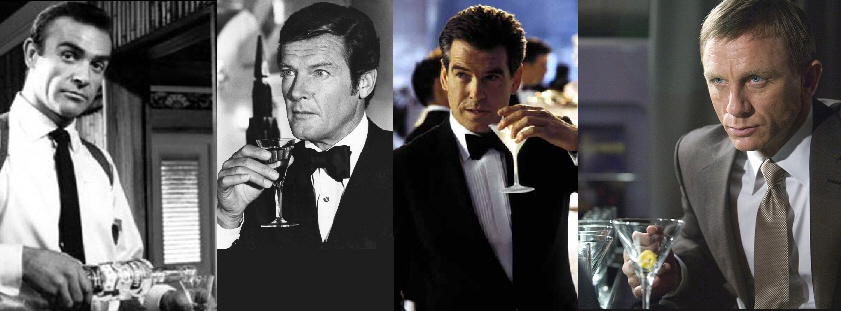
“Shaken, not stirred.” That is James Bond’s line, and it is how I usually mix a martini.
Some purists would say that martinis need to stirred so as not to “bruise” the gin. Writer Somerset Maugham is supposed to have said "a martini should always be stirred, not shaken, so that the molecules lie sensuously on top of one another", and there are times when I am feeling pretty mellow and the stirring is soothing. But I am not a purist, and there are times when I like the violence of having all things shaken up - after all, the world is pretty much shaken up already. Surprisingly enough, and I know you’ll be shocked, the word “martini” is never mentioned in the Bible, but the experience of the people in the Bible is of living in a world that is violently shaken and not gently and sensuously stirred. 

In the Hebrew Testament lesson for today, Darius, the Persian King, has allowed the exiles to return from Babylon where their faith has been shaken a great deal. Now they want to just lie low and take it easy, focusing on their own personal and family welfare, refusing to join in a vision of a new community. Their point of view is “It is time to stop dreaming - and now what do I get out of this for me?”, living into what poet David Whyte,
in the 3rd stanza of his poem The Sun from the collection House of Belonging, observed
… Sometimes reading
Kavanagh I look out
at everything
growing so wild
and faithfully beneath
the sky
and wonder
why we are the one
terrible
part of creation
privileged
to refuse our flowering...

However, the prophet Haggai says that God is not through with the shaking process, and it is time to get to work rebuilding a new Temple as an outward and visible sign of their dependence on God. He tells them not to be afraid for, in the middle of the shaking, it is the process of going deeper into the relationship with God that will get them through. The question changes from “What do I get?” to “How do I give myself to work for the dream?” The translation from the NRSV says that “in this place I will give you prosperity”, and it fits with the talk of splendor and gold and silver. But in Hebrew, the word cited is “shalom”. We tend to think of “shalom” as meaning peace and well-being, and it does, but in this situation, there is never a return to paradise, but the finding of peace in the middle of a conflicted world.

That is the peace that Paul is addressing when he writes to the church in Thessaloniki. He had talked with them about the coming of the end of the world and they were shaken. They ask themselves, “What do I get out of this end? Am I going to get into heaven before the other guy?” Paul begs them “not to be quickly shaken in mind or alarmed, either by spirit or by word or by letter, as though from us.” Yes, there will be an end, as all things must end, but the Thessalonians are to “stand firm and hold fast” to that relationship with God that Paul demonstrated and passed on to them, that shalom, that peace that passes all understanding.

In the Gospel lesson, Jesus is dealing with a group of Sadducees. Sadducees are a group that consider themselves faithful Jews and they know that they are living in a shaken world. The Romans have taken over, the country is occupied, and they are captives in the occupied state. The world looks pretty bleak. The Pharisees and Jesus look forward to another existence after death where all justice will prevail and shalom will finally prevail over turmoil, but the Sadducees see that as “pie in the sky, by and by” talk. They think that the world is already too shaken and can never be put back together. Therefore, all we can do is get what we want, use God to back up contracts (e.g., “so help me God”), and do the religious duties in the Temple for form’s sake. Their central question in this life, since they presume there is no afterlife and God seems restricted to the Temple instead of real life, is “What is in it for me and mine?” For them, shalom means making a profit and passing it on in your family, where they and what you have given them, are the afterlife.

The Sadducees ask the “gotcha” question about the woman widowed seven times, who, by virtue of her sex is not a “real” person after all, and only gains her identity as the “property” of her husband. It is a question that shows their mindset of “What is in it for me?” Jesus dismisses the question as a waste of time and invites them to a life of a living relationship with the God of Moses, of Abraham, of Isaac, and of Jacob. His final answer to them will be in the shaking of his destiny. He will give of himself, his whole self, as part of his faith in that God. For Jesus the point of life is not what you get but what you give.

We refer to the church as the “body of Christ”, we give out bread and wine each week so that all may receive the body and blood of Christ, so that we might become what we eat, and give ourselves. Too often churches sell themselves as places where you can get what you need. Some churches stir up a “get out of hell free card” mentality. Some churches make their buildings look like fortresses, stirring up the image of a safe place away from the shaking world, a place of peace. Some stir up a place of beauty and awe. Some churches stir up a place where one is known, loved, and given worth. There is nothing wrong with those things as long as we realize that the focus of coming to church in this shaken world is not to discern what we can get for ourselves, but to figure out how we can give ourselves as the living body of Christ. Do we refuse to flower into who we were created to be or do we give ourselves in flowering for God’s glory?

We long for being stirred so gently and sensuously, but we are meant to be shaken, not stirred.

Thursday, October 31, 2013

A Reflection of All Saints


A Reflection for the Sunday after All Saints 
All Saints’ Church, Southern Shores, NC 
November 3, 2013 
Thomas E. Wilson, Rector
Today we remember the Saints in this, the church of All Saints. So what is a saint?

I asked several people to tell me what the word “saint” means to them. One person said that her mother was a saint because she was the best person that she had ever known; she stands out from the rest of the people she has met in her lifetime. Her mother was different and that is the core of the meaning of the word saint. It comes from the Hebrew word for a person, place, or thing that has been set aside to be different - to be different as God is different - to belong to the Lord, to be holy. For instance, in the creation story, one day of seven was set aside to be different, to belong to the Lord, to be a Holy Day. In the same way, when Jacob has a dream, he wakes up and sets up a remembrance on the holy ground. When Moses approaches the burning bush, he has to take off his shoes for he is on “holy ground.” When the people set up an altar and a temple, that altar, the temple, the furnishings, the people, and the priests are set apart to be different because they belong to God. 
 
Later in the Hebrew Testament book of Leviticus, there is a section known as the Holiness Code which has a refrain, “You shall be Holy (different) as the Lord God is Holy (different)”. The Holiness Codes were assembled when the people of Israel were in exile in Babylon, and they were in danger of losing their identity in that strange land. They were told that they were not to fit in but, instead, stand out as different because they had a relationship with God. We see this in the Hebrew Testament lesson from Daniel for today as he has a dream which was interpreted to mean that those who stayed in relationship with the God that was different, the God of Israel, and were loyal to this God, would inherit the Kingdom of the Most High. 
 
Daniel is in exile, and the God of Israel seems so far away since the outward trappings of “Holiness”, like the Temple and its services, were so far away. But Daniel calls on the people to continue to be Holy, different in their lives, as God is Holy. Saints live lives that are different because they “believe” that God is working in this life, but it is “belief” in the old version of that word. We tend to think that “belief” means an intellectual assent to a proposition; however, intellectual assent is not what belief really means. The word belief developed from the old English word “beloef” which meant to hold something dear.

As we began our worship today using the Service of the Word, listening to scripture and preaching, we sang the “Shema”, the ancient Hebrew song of loyalty: “Hear O Israel, the Lord our God, the LORD is one.” It continues “Love the LORD your God with all your heart and with all your soul and with all your strength”. We listen because it is the first step in living into loyalty to our God and responding to the love which has been given to us by loving our neighbor and ourselves.

In the New Testament the Greek word for the one who is set apart is Hagios, and Paul, in the letter to the Ephesians, refers not to especially good people but to people who live their lives differently from the rest of the world; they live their lives in the light of the resurrection of the Risen Lord Christ. They live their lives as if the spirit of the Risen Lord is right there in the midst of them. Jesus tells us in the Beatitudes from Luke for today that there is a different concept of happiness for those who live lives in the different reality of the Kingdom of God in this world.

In the Roman Catholic tradition, a capital “S” Saint is one of exceptional piety and purity through whose auspices and intercession exceptional miracles are performed. But we in the Episcopal tradition tend to see that saints are regular people, people who are working - some days with more success than others - but working nonetheless on having a different way of living in the world, a world in which there are everyday miracles happening all the time. These dog- faced people see the miracles that others dismiss as interesting events.

Saints are those who know that God accepts them where they are but are actively working, with God’s help, to move themselves deeper into the journey with God. Like any relationship, it either grows when we work at it or it decays when it is ignored.
Last week was the 40th anniversary of Pablo Casals’s death, the pre-eminent cellist of 20th Century. He was 96 when he died, and he practiced every day of his life from childhood, when his father made him a cello with a squash gourd as a sound box. He did a concert in the Kennedy While House in 1961 when he was in his 80’s. When Casals (then age 93) was asked why he continued to practice the cello three hours a day, he replied, “I’m beginning to notice some improvement.” 
 
A Saint is one who does not pretend to be perfect but can face her/his own defects. As Thomas Merton wrote in No Man is an Island:
But the man who is not afraid to admit everything that he sees to be wrong with himself, and yet recognizes that he may be the object of God's love precisely because of his shortcomings, can begin to be sincere. His sincerity is based on confidence, not in his own illusions about himself, but in the endless, unfailing mercy of God.

A Saint is one who works each day on improving relationships with God, self, and neighbor. Therefore, a Saint is one who works on listening deeper to God by continuing to study scripture. We believe that Scripture cannot just be read on the surface but must be approached through prayer and daily study. 
 
A Saint is one who goes deeper into her/himself and, because there is a natural human tendency to self-deception and blindness, is open and honest with fellow saints on the shared journey. Saints are never loners; they might be hermits, as Thomas Merton was, but they are always connected to others. Merton, a Trappist Monk, in his Conjectures of A Guilty Bystander, wrote about a time in 1958 when he left the hermitage and went into town to the corner of 4th and Walnut in the business district of Louisville, where he had an epiphany:
I have the immense joy of being man, a member of a race in which God Himself became incarnate. As if the sorrows and stupidities of the human condition could overwhelm me, now that I realize what we all are. And if only everybody could realize this! But it cannot be explained. There is no way of telling people that they are all walking around shining like the sun.
This changes nothing in the sense and value of my solitude, for it is in fact the function of solitude to make one realize such things with a clarity that would be impossible to anyone completely immersed in the other cares, the other illusions, and all the automatisms of a tightly collective existence. My solitude, however, is not my own, for I see now how much it belongs to them — and that I have a responsibility for it in their regard, not just in my own. It is because I am one with them that I owe it to them to be alone, and when I am alone, they are not “they” but my own self. There are no strangers!
Then it was as if I suddenly saw the secret beauty of their hearts, the depths of their hearts where neither sin nor desire nor self-knowledge can reach, the core of their reality, the person that each one is in God’s eyes. If only they could all see themselves as they really are. If only we could see each other that way all the time. There would be no more war, no more hatred, no more cruelty, no more greed…I suppose the big problem would be that we would fall down and worship each other. But this cannot be seen, only believed and “understood” by a peculiar gift.


A Saint is one who each day asks for help from a power greater than him/herself. A Saint lives in the spiritual reality where prayer is as necessary as breath, and indeed it is God’s breath flowing in and out of us. A Saint takes prayer seriously. When I thought about the saints in my life, I immediately remembered Bill Wienhauer, who died six years ago, who was my Bishop before and during the time I went to seminary. One day in Seminary, I decided I wanted to suck up to him since he would be the final voice of my ordination, so I faked sincerity and asked him to pray for a particular issue. He agreed but he said that he would not be able to add me to his list until next week on Thursday. His prayer list was full but he had an opening then. He explained about how he saw intercessory prayer as a participation in a three-way dialogue with God. I came to realize that, when he prayed for me, he entered into my heart, my soul, and my brokenness and took them on himself, carrying the shared burden to God’s Holy, Healing Spirit. To pray for others is not to add a name to a list, but an act of creative imagination on a spiritual plane. 
 
A Saint is one who commits time, energy, soul, spirit, treasure, and life to the relationship with God and God’s world and God’s people.

Saints are all over the place, and I can still see them even when they have crossed the bar. I look over at the choir and, in my mind, I still see Lillian Oswald and she sings to me about the value of the choir, not in its performance but as it leads worship. I still see Jack Mann who, in this life, kept showing us how to care for the poor and who in the next life is still urging us to care for those outside ourselves. 
 
One of the things we do on All Saints Day is to thank God for all the Saints in our lives and to give thanks for the saints who have gone before, who are now doing intercessory prayers for us, but on another shore, in another plane of existence in God’s loving universe of being. To use 19th century British novelist George Eliot’s phrase, they are part of the “Choir Invisible”, those she remembers who have shaped her life but are now dead, but to whom she is still connected and who are still shaping her life. The first stanza of her poem goes:
O may I join the choir invisible
Of those immortal dead who live again
In minds made better by their presence; live
In pulses stirred to generosity,
In deeds of daring rectitude, in scorn
Of miserable aims that end with self,
In thoughts sublime that pierce the night like stars,
And with their mild persistence urge men’s minds
To vaster issues. 
 
Today we remember the Choir Invisible and Visible, the choir of all Saints both living and dead who sing the same song to lead us in our worship of God. In this church, the choir is the whole congregation who choose to sing, not just with their voices, but with their hearts and lives in order to live different lives and to participate in a different and Blessed reality.