Thursday, June 19, 2014

All Are Created Equal (Part 1)


A Reflection for 2nd Sunday after Pentecost (Proper 7)         All Saints’ Church, Southern Shores 
June 22, 2014                                                                           Thomas Wilson, Rector
Genesis 21:8-21          Psalm 86:1-10, 16-17              Romans 6:1b-11          Matthew 10:24-39
“All People are Created Equal” (part one)


A Video of this sermon is found on You Tube : http://youtu.be/j4mPER86J44


This is the first of three reflections which will be spread out over the next Sunday and the Parson Tom’s Tomes for July. The plan is that they will be shorter than my usual sermons or homilies because I believe that a preacher should stop talking before the people begin to wish s/he would.

It starts with a dream.  When God created the entire universe, God gave a dream to all of creation, which became part of our collective unconscious. Over centuries the dream kept coming to people all over the world. The message of the dream from the Divine Dream-maker was "All people are created equal." The problem is that, when we wake up from that dream, we forget it.   We look around and see all the inequality. We see the rich getting richer, we see the powerful consolidating their own power, we see lines drawn more brazenly between race, color, language, gender, sexual orientation; you name it, and we devise a reason why some people are less equal than others. Our rational minds look at the evidence of what passes for normal and say, "I guess that is the way it is supposed to be." Our egos, which have the function of interpreting how to get along best in the world, take the message from the rational mind’s evaluation of reality and say, “Let’s find ways to use it for our advantage. After all, if equality is only a dream, therefore it is not really real, and we need to live in the real world.” We accept the inequality but the dream keeps coming back over the eons because, in God’s reality - and God is the ultimate reality - dreams are incredibly real, and our perceptions are only self-serving opinions.
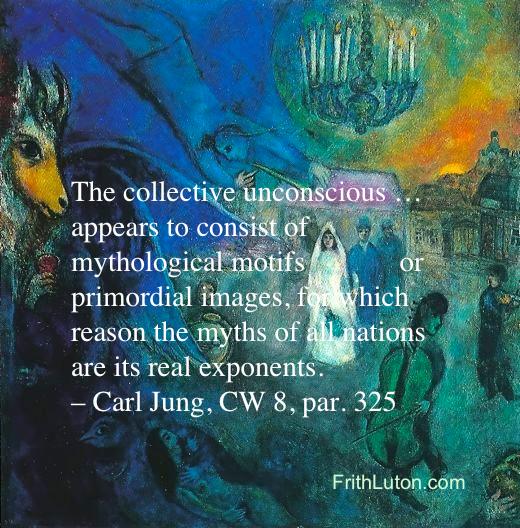
Dreams are how God speaks to our personal, cultural, and collective unconscious free from the tyranny of the rational mind. Individuals gather together and share their dreams within the context of their culture and, out of those cultural dreams, we create stories, sort of like jazz riffs, off the themes of the dreams. What we notice is that myths from one culture seem to have similar themes with myths from other cultures, and we think that all of these different myths have their beginnings in the dreams that God planted in the collective unconscious of all humans.

In today’s lesson from the Genesis collection of stories is the mythic story of the struggle between Hagar and Sarah, who both have sons from the Patriarch Abraham. Hagar’s son is named Ishmael and Sarah’s son is named Isaac. Since this is a myth, the names provide some commentary about the outline of the story. The name “Sarah” means something like “Princess”. Hagar means something like “Stranger”. Ishmael means something like “God has listened”. Isaac means something like “the one who laughs”. So what do the names tell us? Sarah, the princess, the one who feels as if she is entitled, is in opposition to the Stranger, Hagar, who was from Egypt and was originally the slave of Sarah. Both the Princess and the Stranger want a son. The Stranger has the first born son and names the child as “God has listened”. God has been faithful to the Stranger and that irritates the Princess. However, the Princess has a son much later and that son is called “the one who laughs”.   I tend think of that in the context of Proverb 1:26, “I also will laugh at your calamity; I will mock when panic strikes you,” a variation of the more familiar proverb of “the one who laughs last, laughs best”, and all I can think of is that he probably had a nick name like “Na -Nya-Na- Nya –Nya”.

There is an earlier chapter in this myth when Sarah, who had agreed to this option of Abraham fathering a child through Hagar, got really resentful as Hagar sashayed around showing off her pregnancy. Sarah turns brutal and Hagar tries to run away, but an angel convinces her to return. If any one of us has been in a blended family – heck, even a family where everybody has the same parents - we can imagine the infighting that usually goes on for dominance. The Gospel also has Jesus remind the disciples that families can be snake pits as competing claims for dominance are played out. He tells the disciples that even a sparrow which is sold two for a penny is precious in the sight of God. 

There is also another clue in the Hebrew word that this chapter uses when Sarah sees Ishmael “playing” with Isaac. This word can be, and has been, translated several different ways. The word can mean playing with, or laughing (with or at), or mocking, or even fondling. Each choice of translation puts all sorts of different interpretations for Sarah’s reactions. I can imagine that Ishmael, who is 14 years older that Isaac, probably bullied the little pest during this great feast to celebrate the weaning of Isaac.

So the fight is set up over who has the most equal part of Abraham’s love and promise, of which son was the more equal. Sarah pushed the weak Abraham to acknowledge what she interpreted as the truth. Ishmael, the son of the slave Hagar, has to go; he had to die so that Sarah's son Isaac could have the bigger portion of the blessing. Now if this were an historical account, then there would be historians and theologians arguing over who was more equal than the other, who was the victor. This is what we see in the fight between Muslims and Jews, and by extension, Christians. The Jews see themselves as descendants of Isaac, while the Muslims see themselves as descendants from Ishmael. But this is not a history, it is a myth, and so listen to what God does in this story. God will bless both of them. God is with Hagar as she is afraid she and her son will die, and God is with her enemy Sarah and her son Isaac. The myth tells us that God’s dream is that both Ishmael and Isaac are equal in the eyes of the Divine Dream-Maker. In this myth no-one is cast out of the presence of God.

The Psalmist for today underlines that message when the Psalmist sings “For you God are good and forgiving, and great is your love to all who call upon you.” I look at this message and I think if the dream is “All are created equal”, then what does God think of my enemy? If God is the definer of all things, then how do I define my enemy? Do I believe that All Persons are created Equal?”


Thursday, June 12, 2014

In the beginning

http://youtu.be/dqeqNsfzbNs     is the video of this sermon


A Homily for Trinity Sunday                         All Saints’ Episcopal Church, Southern Shores, NC June 15, 2014                                                   Thomas E. Wilson, Rector
Last week I mentioned that the stories from the Book of Genesis are best understood as myths. We have this unfortunate habit of thinking that myths are lies, but myths are more than that. Myths are cultural stories - which may or may not be factually correct – that we use to explain our understanding of what might be the deeper truth of the fundamental nature of things.  The themes for these stories come from our connections to the layers of personal and cultural and collective unconscious. As I explained last week, myths are public dreams and dreams are private myths. Each night we dream, and our personal, cultural, and collective unconscious speak to us in symbols in order to help us understand ourselves and our relationship to our true selves, our souls, our God, and the world in which we live.  


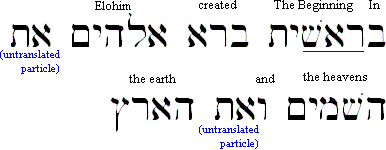
In a dream group, we give a title to each dream we share and the title gives us a clue to the theme. The name “Genesis” comes from the Greek translation of the first word of the first book of the Bible. In Hebrew there is the letter “bayit”, which we tend to pronounce as Beth, and when the Hebrews used the letter for a word, it meant “house” – that which contains – or “household” or “Temple” as in Beth-lehem, the “house of bread”. However, when only the letter is written, it is a preposition meaning “in”. The next word in the book of Genesis is “raysheeth” which means first, beginning, most importantly, so therefore, when the word and preposition are combined, the word is “b-raysheeth”, “In the beginning” or “First and foremost” or “Most importantly” God created the heavens and the earth, everything that ever was and will be. 

The myth that follows gives the Hebrew understanding of the nature of all creation. In the other 
cultures around them, like the Egyptians, the Assyrians, the Babylonians, the creation myths were tied into a struggling encounter between two or more Gods, like the Canaanite Ba’al, the storm God, struggling with Yam the Sea Goddess, dragon, or the Babylonian Marduk, the hero God, and Tiamat the Sea Dragon, or the God of light and God of Darkness. Out of that battle (or sexual encounter, since both are symbols of struggles), then the earth is formed and life begins as both a resolution of one battle and the first act of the continuing struggle of life. The Hebrew myth aims to explain that most importantly there is only one God, and everything that is our understanding comes from the expression of that one God, whose spirit brooded over the void and whose expression, breath of that brooding spirit, gives life. God is the God of dark and light, of sea and sky, God of both male and female, giving life to everything we know, even to the things we fear, like the sea monsters, which the Psalmist declares that God made for the sport of it.

If you try to make this story literal, you miss the point, so we are urged to see each part of the myth as symbolic pointing to a deeper truth. My way of understanding it is that the myth tells me that science tells us that the Cosmic clock begins when 24 Billion years ago there was an explosion, a burst of being; the burst of energy hurling outwards within the tension of the allurement of gravity drawing it back in. The myth tells us that God spoke the breath of energy that begins this whole process and that every atom of all creation contains the spirit of God. If we look at the Cosmic clock as divided into 12 portions of 1.25 Billion years, galaxies start forming in February, with our Galaxy forming in September, a galaxy so wide that if one traveled at the speed of light  in order to get to the other side, it would take 100,000 years. On October 1st, the words “Let there be light” reaches here as our sun begins to form. On October 10th the earth is formed. On October 20th single cell organisms start to appear, and on December 31st of the Cosmic clock at 10:54 PM, the mammals of the genus homo and subspecies sapiens or humans with wisdom start to appear. Humans are last to be made in this myth to remind us that God makes us in God’s image; the image is not physical but rather, at the core of our being, the true self which has the three-fold ability to create, to care, and to love as God creates, cares and loves. At December 31st at 11:59 and 51 seconds the Homo sapiens begin to write down thoughts and record dreams and imagination; five seconds later Jesus comes into the last four seconds of this cosmic clock to point us again to God, to remind us of the Divine Word spoken at the beginning calling us to create, care, and love.

The Genesis myth of creation, that public dream speaking a deeper truth to our true selves is meant to fill us with wonder that this whole creation is filled with God, and our task in these last nine seconds of creation is to pay attention to the whole of creation. We are not to rise above matter but to go deeply into all of the spirit-filled matter. The Spirit is not separate from matter but infuses all of matter. Jerry Wright, a former Presbyterian Minister and current Jungian analyst and one of my instructors for dream encounters (and from whom I have stolen this whole Cosmic Clock analogy) warns us of the attempt to split spirit and matter saying, “When we don’t deal with the things that really matter, it becomes the matter with us.”

First and foremost, “In the beginning”, “Most importantly”, “b-raysheeth”: we are called to live into that wonder of all creation as we listen to that initial creative word resonating with those homo sapiens, humans who, in their wisdom given by God, create, care, and love. Jeff Edwards told us about care which is what stewardship is, the care for all of what we have as a gift from the loving God. We are stewards of the continuing creation which is still evolving. This is also what our Sunday School teachers do with our younger children, as they pass on the stories, dreams, and myths about what it means to be humans in relationship with God - humans with the ability to create, care, and love in the image of God as God creates, cares and loves. It is what we do when the Preacher calls us to pay attention to what is first and foremost. We have to listen. 

Paul in his letter to the Corinthians ends with a call to them and to us to listen and, in listening, create a Shalom peace in our communities. He says:
Finally, brothers and sisters, farewell. Put things in order, listen to my appeal, agree with one another, live in peace; and the God of love and peace will be with you. Greet one another with a holy kiss. All the saints greet you. The grace of the Lord Jesus Christ, the love of God, and the communion of the Holy Spirit be with all of you. 

Monday, June 9, 2014

Good bye Mr. van Laer


A Reflection on the Occasion of a Memorial Service for Nick van Laer                 June 9, 2014
All Saints’ Episcopal Church, Southern Shores, N.C.                      Thomas E. Wilson, Rector

Romans 8:14-19, 34-35, 37-39       Psalm 139:1-11       John 6: 35-40
Nick van Laer                              Nov. 13, 1928 - June 6, 2014

One of the difficulties of being in a church for a period of time is that you start to care about people. When I was a therapist or a counselor, it was easier because I had to keep a professional distance. I would see people in my office after having made an appointment, and it was only for a set period of time and on a particular agenda item. We might set up another visit for another set period of time, then they would leave. After they left, I would write up my notes and reflect on Counter-Transference, which is inappropriate feelings and emotions about the client. If I were to see them on the street at a later time, I would not make the first move because that might betray that I had a professional relationship with them. Outside the office we would never talk about the problem that brought them to see me, and inside the office, if we talked about things outside the problem, then this was seen as resistance to dealing with the problem. I remember once when a young boy client who was coming in to see me talked about pitching at his Little League team's next game, and I impulsively showed up to cheer him on. His pitching that night was horrible because I had stepped outside of my therapeutic role and, by so doing, fulfilled his transference fantasy of my being a replacement for his absent father. His symptoms returned and my Psychiatric Consultant gave me “what for” about my crossing the lines.

In seminary we were told to keep a professional distance with parishioners, lest I be accused of encouraging a clique of personality or other kinds of inappropriate relationships. We were told that a good Priest would be able to leave and people might miss him or her for a little bit, but then they would say, “Well enough of that; who is going to be the replacement?” William Blackstone in his Commentaries on English Law wrote: “He is called parson, persona, because by his person the church, which is an invisible body, is represented; and he is in himself a body corporate, in order to protect and defend the rights of the church (which he personates) by a perpetual succession.”

Nick and Helen were one of the couples in this church who were determined not to treat me as a “personator” of the church. They believed that there was a full person behind the role and, over the years, I ate a lot of his food (and he mine), drank a lot of his liquor (and he mine), swam in his pool to get away from the summer heat, laughed with him at his jokes, talked with him about our shared interest in history, resonated with his gripes, didn't try to bully him away from his doubts, avoided church politics as unproductive, listened as he shared his frustrations and sadnesses, mourned at his losses, and marveled at how much he loved Helen. Nick was not a client; yes, he was a parishioner but, more importantly, he was a friend.

You see, Nick had no truck with roles; he wanted to know what was behind mere personas. What you saw in Nick was what there was; and, God help us, he approached God in the same way. He wasn't all that sure about an afterlife, but he was bound and determined that this life was important. Faith in God was not about “getting into heaven” after he shuffled off this mortal coil, but faith in God meant that God was walking with us each day. For him, when Jesus in today's Gospel lesson said that he was “the bread of life”, Nick interpreted it to mean that the Spirit of Christ was the Spiritual nourishment to make it through each day. Nick liked to share that bread when he would talk with newcomers, and especially when he fed the homeless and helped host them in this church.

Nick knew he was an adopted child of God as Paul urges us to see ourselves in today's lesson from Romans. Nick knew something about adoption. He was adopted by this country when he became a naturalized citizen and was not content to be a mere “summer soldier or sunshine patriot” but served his country with dedication and love. The vanLaer house is a place of adoption of stray cats and racoons, creatures that showed up and found feeding and caring and love, like some Priests I know. Ted Bishop, for instance, stayed in their house when he was interviewing as an interim at St. Andrew’s decades ago, long before All Saints’ was even considered. Nick's sense of duty carried over to his church attendance. He was always loyal to the churches to which they belonged in their travels throughout the world, but I think he saved his passion for All Saints’ when he and a group of parishioners at St. Andrew’s came up north and started to have Episcopal services at Duck Methodist during the summer months. He generously threw his energy, his time, his talents, his treasure into this church. He was one of the people who created a sense of wonder about what we were doing here long before I showed up and how he wanted other people to join him in his love for this place.

One of the things the founders of this church did was to have two long banners proclaiming “Alleluia” in the Easter Season which they hung up behind the Altar Table, and people were invited to write their names on these white banners as an outward and visible sign of their invisible and spiritual New Life in the new church. It was Pentecost yesterday so the red Pentecost season banners were hung as the white banners were taken down, and new people were invited to sign their names. As we were taking them down, we reflected on all the names of people that we saw who were no longer living, and we remembered their names and realized that, while their bodies were not here, their spirits were with us every time we gathered together. They were on the other side of the table as we all had communion together as the Priest would say the lines inviting the congregation to sing the praises of God in the Sanctus, the “Holy, Holy, Holy”, “and now with Angels and Archangels and all the company of heaven . . .”

As we were taking down those Alleluia banners, it hit me that Nick indeed was now on the other side of the communion table with a lot of his other friends. Nick has had real problems getting to church for the last several years as his body was letting him down. Yet, while his body was letting him down, that stubborn old Dutchman's heart kept beating so strongly - until finally it stopped and gave him rest. On the anniversary of D-Day, Nick crossed the other channel to land in a deeper and safer harbor to join all the others who have gone before.

Many of you know my addiction to old movies, but high on the list of my favorites is the 1939 version of “Goodbye Mr. Chips” with Robert Donat and Greer Garson. In that movie, there are series of montages as the young boys file by the instructor Mr. Chipping as they check in for the new school semesters over the years. Nick, while his spirit will continue to be an integral part of the fabric of this religious institution, his body will not be here to check the new people and new priests into this fellowship of seekers of a deeper truth and be part of the informal orientation team. Nick has graduated from this school and enrolled in something much higher. Nick was never sure he believed in something further, but we think he was pleasantly surprised as he checked in to a joyous “Hello Nick”, and we on this side say, “We will see you again when our school term ends. Good bye Mr. Van Laer.”

Thursday, June 5, 2014

Pentecost 2014


 You Tube video of sermon is:    https://www.youtube.com/watch?v=OEBBlFqB5qs


A Reflection for Pentecost                                         All Saints’ Episcopal, Southern Shores, NC June 8, 2014                                                                 Thomas E. Wilson, Rector
Acts 2:1-21                                         John 20:19-23
Today is the Feast of Pentecost, but before we deal with the Pentecost story, let me remind you of another story - the Tower of Babel story/myth from the Book of Genesis.
I call it a myth because a myth is a story which attempts to explain why things are as they are. Myths show up in in many different cultures in similar ways because most civilizations want to understand the world about them. Each culture gathers together and, in their search for truth, they enter their unconscious connections to a collective unconscious and relate their public dreams in symbolic form which end as stories which may or may not be factually correct but which carry a deeper truth. A way for me to understand the concept of a myth is by defining a myth as a public dream and a dream as a private myth. In the individual experience, the events of a dream may be rather fantastic as our logical mind remembers them, but they are messages from our true Self, our Soul if you will, the place where God's true self connects with us and we are in connection with all of creation which occurs in our unconscious when we are asleep. These dreams may come to drive home a deeper truth about us, about the divine, and about the world we live in.

As you remember in the Tower of Babel myth/story, the people of the earth are all connected to each other, through inheritance from Noah after the flood story and from Adam and Eve as part of the whole creation myth - which may or not be factually correct, but is backed up by the DNA evidence which shows that people all over the world are genetically connected to each other. In the story, the people who are all connected to each other but who are also filled with their own pride and arrogance decide to build a tower on the plain of Shinar to reach to the Heavens to make a NAME for themselves. To make a NAME means to be in charge of their own identity as equals with God. Out of this folly, the tower is scattered and the people are scattered from each other by language as their differences develop and harden into habits of culture and race and color. The myth tells us that we are all related as brothers and sisters, but we act as strangers to each other as, in our arrogance, we view each other as potential enemies. 

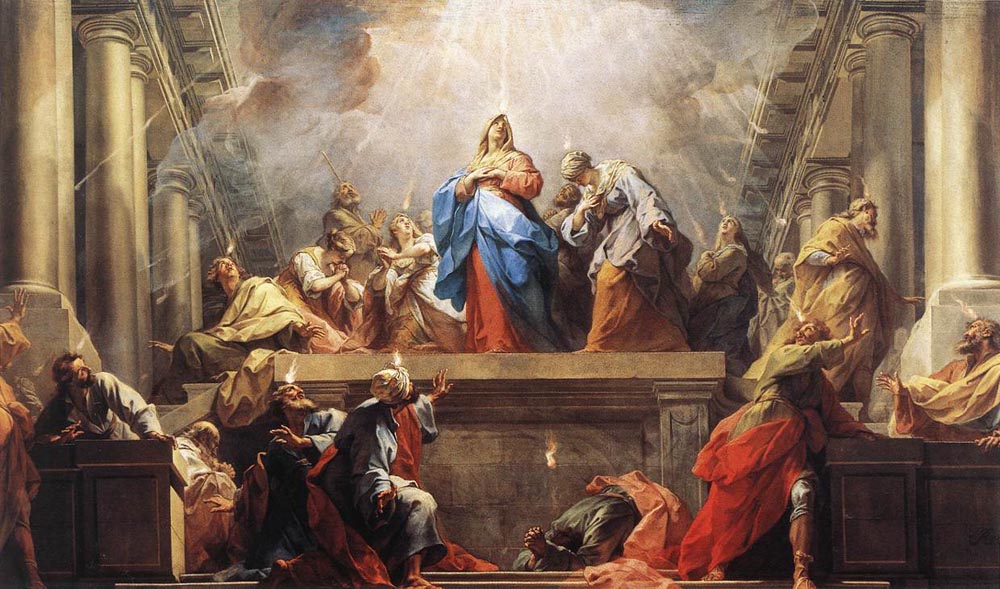
The story of the Pentecost experience is a recapitulation of the Tower of Babel story but told in reverse. The disciples are gathered together, men and women, all as an intentional community, not to rise up as a challenge to God but to enter into the NAME of God, to have their identities fashioned by the Spirit of the Living God. They face a challenge and they have some anxiety about having enough strength to meet that challenge. Here in that room the community’s members empty out their fears, arrogances (for indeed, arrogances are only fears in disguise) and differences and rediscover that they are connected at a deeper level to each other and indeed to all the world. The emptying out of themselves that they are the special ones is to leave room in their soul for God's spirit to come into their lives. The Spirit, the wind, the breath of God comes and drives them out into the world, to meet the world on its own terms in order to share the contents of their souls in such a way as to knock down and transcend the barriers of geography, habits of life, language, race, and color. 

Now, we can spend a lot of time arguing how or if this factually happened, or we can accept the Book of Acts as the stories the church tells to explain how the followers of Jesus changed their dependence on the physical presence of Jesus and allowed themselves to be filled with the wind, the breath, the spirit of the Living Christ.  This transformation allowed them to leave their homes and go into all the world in order to share their hearts and souls with previously unmet people who were members of the larger family and only disguised as strangers.

The disciples had a choice - they could be like the people at Babel and try to build themselves up as Towers to take the place of God in their lives, or they could empty themselves out in love in order to bring peace and forgiveness to the broken world.

The stories of the Book of Acts indeed act as our mythic story of how we deal with our faith and especially how we go out into the world from this church. I am especially aware of it as I look out at our group of graduating high school seniors who I first met when they were finishing first grade. They are no longer to be kept safe from the world; it is time for them to face new challenges.  Part of what we will do is to breathe the breath of God on them and send them out to be adults in the world, doing the ministry of sharing the divine spirit within them. This is still their home and they can always return because they are always in our hearts, but we send them out as our ministers.

As they go on to the next phase of their lives, they will meet many different kinds of people, from many different cultures and different belief systems. Their job is not to convert people but to honor them where they are and, at the same time, share with them the truth that is in their own souls. What our graduates will find is that they need to go deeper into their own souls to be able to communicate the mystery that is inside them. This is not a time for glib doctrines or memorized prayers or easy cynicism, but rather, for a hard struggle to find the dreams that are percolating inside their true self, the one they were created to be. God does not speak to their souls in chronic undifferentiated formulas, but each dream the divine dream maker implants is different as each of them is different, and yet each of them and each of us and each of the brothers and sisters we have not yet met are all connected in God’s love.

The lesson from the Gospel of John for today shows us who we are to be. In that Gospel, Jesus came to the people who had let him down and he announced Peace and Forgiveness.  We are Peace-givers and Agents of Forgiveness. Peace is not the cessation of conflict but the bringing of wholeness to broken people. We live in a broken world and we have a love affair with violence, and our job is to heal the brokenhearted, strengthen the weak, stand up for the persecuted, and work for justice. Forgiveness is a gift that we give to those who have disappointed us. I ask the graduates to forgive me as your Priest when I have not been there when you needed me, to forgive us, the church, where and when we have let you down. We ask them to forgive their parents; we try as much as we can, but we wish we were better. We ask that they learn how to forgive themselves as God has already forgiven them and us.  

I ask you as a Parish to keep these students in the Holy Space of your hearts as they do our work of ministry in other places to bring about God’s dream for us.