Thursday, October 16, 2014

The Old Man and Joshua


A Reflection for XIX Pentecost (Proper 24)   All Saints’ Episcopal Church, Southern Shores, NC October 19, 2014                                                 Thomas E. Wilson, Rector
Exodus 33:12-23               Psalm 99              1 Thessalonians 1:1-10                   Matthew 22:15-22
The Old Man and Joshua
The Old Man sat down on a boulder for he was tired. The Young Man, Joshua, came up to him with a look of concern.
Joshua said:     Moses, what is the matter?

Moses:             I am not able to keep up anymore. My body is giving out on me and I can feel the end of my days coming.

Joshua:            Stop that! You are not too old - and we can help you and carry you until we reach the Promised Land.

Moses:             No, I have a destiny with death and I am not going to run away from it. I spent so many years of my life running away from things. When I was a young man, I killed an Egyptian overseer and buried his body as a way of running away from my responsibility. Nothing ever stays hidden and when that body was found, I tried to keep as quiet as possible. But the truth came out and I ran away to the land of Midian. However, no matter how far away I ran, I could never run faster than the God who was living inside me.

Joshua:            Like the Song goes, “Where can I go from your Spirit; where can I flee from your presence?”

Moses:             That is the one.

Joshua:            So God does that with you too?

Moses:             It is part of being human; we are all God-haunted. For years in Midian I tried to ignore this God inside my very self, my soul, and I did all the things I needed to do to succeed. I defined myself by what I did for a living and the place in which I lived. But the deeper part of me belonged to Her, and She was like a pest who would not take the hint, every place I looked I kept seeing Her. She finally revealed herself to me in the burning bush in such a way that I could no longer ignore Her.  She entered into my daily life and I could no longer run away. We have been so intimate.  Every time I breathe, Her spirit enters into my body and fills me with Her presence. God knows these places. 

Joshua:            Do you know all of God’s places?

Moses:             No I don’t. She is to me like I am to Zipporah, my wife. She knows me as well as any human can, and yet there are places inside my heart, places of such despair and fury, that she would never understand. There are times of such joy that I cannot find the words to share them with her. I love her as much as I can love any human, but there is part of me that is a mystery to her. I love God, but there is so much of God that is way beyond my understanding. I once asked God to show Herself to me, and all I could get were glimpses. 

Joshua:            I feel the same way. Everything I say about God is so inadequate. He is way beyond my understanding. It is funny, you refer to God as “She” and I say “He”, but they are the same. God comes in so many disguises.

Moses:             I don’t think they are disguises as much as they are inadequacies of our imagination and language. God is always the same, but when God deals with us and lives within us, He She is not a cookie cutter, chronic undifferentiated deity.  We see different facets of the same diamond, and the more we experience, the more we see. Yet despite all of our talk, we come to the awareness that every time we attempt to define and say the phrase “God is”, as if God has left the room, then we miss the point.

Joshua:            So the greatest blasphemy is to speak of God in the third person instead of the second person “You”; to speak of God instead of to God.

 Moses:            That is our first attempt to run away from God, when we keep God as an intellectual proposition, a theoretical abstraction. When asked if he believed in God, someone replied, “I do not believe. I know.”

Joshua:            But what about that other line from that song you quoted earlier, “Such knowledge is too wonderful for me; it is too high I cannot attain to it.”

Moses:             Knowing God is not about what is in my head but about the intimacy of knowing within the depth of my being. This is the basic truth of my life - that I am God’s beloved and chosen by God, not by word alone but by power and God’s Holy Spirit which claims me to live into whose image I was created to be. Back to the song: “I am wondrously and marvelously made.”

Joshua:            If I could live life like that were true every moment of my life…  But I keep beating myself up for things that I have done or not done. I look at myself and say things like “I hate myself!”

Moses:             If you look at yourself and say those things about yourself, then you will say and think those things about others. The God who dwells within never says that He She hates us, but that we are God’s beloved. If we are in the image of God, the God that we have inside us is the human we present to the world. In order to change ourselves, we have to listen to the God who in love “created my inner most parts and knit me together in my mother’s womb” as that same song goes.

Joshua:            You seem stuck on that song?

Moses:             I am an Old Man and hold on to things. But it is time for me to let everything go. I will not see the Promised Land, but I will enter into the fullness of God soon, as, I pray, we all will. But as for you, still on your journey . 
. .
Joshua:            Let me stop you there, and as I have said before and I’ll say again, I am not going back to slavery in Egypt.

Moses:             After I am dead and you enter the promised land, say to the people who will want to go back to the old ways something like, “If you decide that it’s a bad thing to worship the LORD, then choose a god you’d rather serve—and do it today. Choose one of the gods your ancestors worshiped from the country beyond The River, or one of the gods of the Amorites, on whose land you’re now living. As for me and my family, we’ll serve the LORD.”

Joshua:            “I’ll write that down.”


The Old Man and Joshua (Poem)
Feeling the end of my days,
Spending years running away
But She always gets there first.
We humans are so God-haunted

Spending years running away.
Every time I breathe Her spirit enters,
We humans are so God-haunted.
I ask Her to show Herself to me.

Every time I breathe, Her spirit enters
But all I could get were glimpses.
I ask Her to show Herself to me,
She in third person is blasphemy

All I could get were glimpses
As She always gets there first.
She in third person is blasphemy
As I feel the end of my story.


Saturday, October 11, 2014

The Old Man and the River of Complaints September 21


Parson Tom’s Tomes
This edition of October's Tomes is using the lesson from the Sunday that I was gone in September in the Moses Cycle where the Hebrew children are complaining about not having meat and bread to eat when they have left Egypt (Exodus 16:2-15). This is a stewardship story which I call; “The Old Man and the River of Complaints”

The Old Man whose name was “Moses” which meant “Pulled from the Water” came to the meeting place with Aaron, his brother and Senior Warden: “That did it! Find yourself a new boy! I am fed up with these people flooding me with their whining, their moans, their “poor me”! Do you know what they are complaining about now?”

Arron answered: 'Well, Yes I do; remember I get left with the people while you go gallivanting up on top of mountain tops talking with God. The people want everything to be like it was in Egypt, but without the outward chains. They don't think they have enough of what they want. They think that freedom is when you have more of what you want in your hand rather than the ability to work on becoming who you were created to be.

The Old Man complained; “Right now I don't really care about whom they were created to be; I’ll tell God to just give them what they want and get them off my back!”

Aaron said: “It won't change the situation. The only way it changes is for them to give up seeing the world as all about their own desires. It is not all about them. These are the chains that bind them into slavery for appetites.

Moses interrupted; “Yeah, yeah, I know but while that’s nice in the abstract but I want is some peace and quiet. Tell you what I’m going to do –I’ll ask God to rain down meat from the heaven and make more than enough bread to grow on the ground and then they will calm down, because if they have more than they need those things will be less important.”

Aaron smiled and said; “For us humans there is never enough of what we desire. Our task is to desire what we have and instead of grasping for more we open our hands to give thanksgiving from a grateful heart.

The Old Man said; “Yeah like that is going to happen.”

Aaron said, “Maybe we can pray not for meat but for changed hearts beginning with ours.”

Moses replied; “Sure, you do that in your spare time and I will put the order in upstairs for manna and quail. Maybe I’ll try to cage some lottery tickets so I won’t need God as much when I try to do my job.

Aaron said:  “We did not leave Egypt to switch from being slaves for Pharaoh to being slaves for God but have been made children of God. We do not work for God we work with God and doing the work which God calls us to do with God does not end but begins but with seeing things differently and changing hearts.”
The Old Man and the River of Complaints
On the river of complaints
Flooding me with whining
Even without the outward chains
Not thinking they have enough

Flooding me with whining
About what their hands wanting
Not thinking they have enough
Bound into slavery for appetites

About what their hands wanting
Praying for changing hearts
Bound into slavery for appetites
Does not end but begins

Does not end but begins
Praying for changing hearts
Even without the outward chains
On the river of complaints.


Friday, October 10, 2014

The Old Man and Aaron


A Reflection for XVIII Pentecost All Saints’ Episcopal Church, Southern Shores, NC October 12, 2014 Thomas E. Wilson, Rector
The Old Man and Aaron
The Old Man had been up on the mountain in a retreat with God. Then he was aware of a disturbing feeling inside himself. He told God that something seemed to be wrong, and he could not shake the feeling. He knew he should not have been gone so long. He picked up the tablets on which the law had been carved and started down the mountain. As he came near to the base, he started to hear the noise of celebration. Something was indeed wrong; the people had promised him that they would fast and pray for him while he was on top of the mountain, and now they seemed to be playing music and dancing. He ran the rest of the way down the mountain and saw the people feasting. He stormed into the tent looking for Aaron who he had left in charge while Moses was gone.
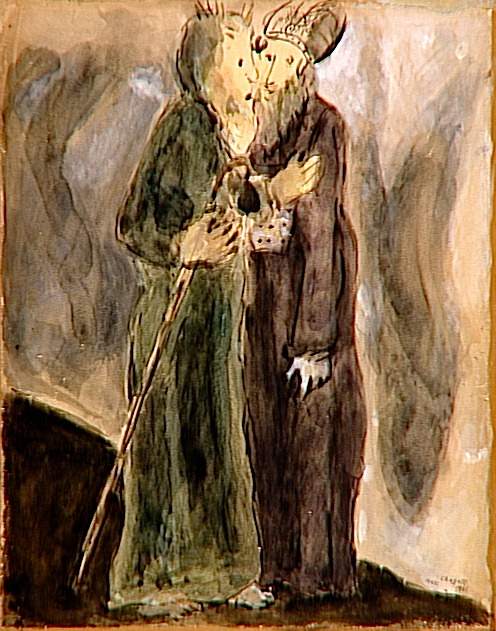
Chagall's Moses and Aaron in the Museum in Nice


The Old Man said, “What have you done?”


Aaron got up from his couch and offered his cup of wine to Moses and said, “Hey, chill out man, you look like you ran down the mountain. We missed you. How did your summit with God go?’
Moses said, “Fine until I heard all this caterwauling and noise. What in God’s name is going on?”


Aaron leaned back and said; “Well, it is sort of like this. The people were getting restless, and I made an executive decision that, since you weren’t here and their faith was starting to waver, I thought I would help them out. So I did a special collection and we made a god in the form of a calf and covered it with the melted gold. Since the bull calf is a sign of future fertility and good fortune, I thought I would make this as an outward and visible sign of God’s promise to take us out of Egypt and into the Promised Land.”


Moses said, “First of all, you do not make gods, God makes you. God is the creator whom we worship. We do not worship what we create. What you have created is a wish fulfillment fantasy for the future instead of paying attention to the fullness of the present.”


Aaron said, “What does it matter as long as it gets you through the night?”


Moses said, “It matters because you reduce God to your servant and reduce the relationship with God so that it is based on utility, a contract mentality of “what do I get out of this relationship?”. Contracts are defined by mutual utility where the party of the first part benefits in the exchange of services with the party of the second part for mutual benefit. I was working out an extension of the covenant God had made with Abraham.’


Aaron interrupted, “Covenant or Contract; what is the difference?”


Moses replied, “A covenant is based on mutual trust and love – not only in the good times but when things all go south. It is not about what the parties have to do, but it helps to define the relationship so each side knows what the steps to the dance are.”


Aaron retorted, “Dancing! Yes, that is exactly what we were doing. We were dancing with joy.”


Moses corrected him, “No, you were moving your bodies to get away from your fears and anxieties and to get away from yourself and others. Real dancing is when you pay attention to the person you are with, paying attention to the music which fills your soul, and paying attention to the sacred space between you.”


Aaron said, “I thought our morale was getting low and we needed a party.”


Moses replied, “God is hosting a banquet. A banquet where one sips God’s spirits to taste the joy of life, where one pays honor to the host and to the other guests and where we serve each other. We are here in the wilderness but, like the old song goes, “God prepares a table before me in the presence of mine enemies: thou anoints my head with oil; my cup runs over.” This is the banquet to which we are invited, but you guys were dressed for another kind of party.”


Aaron complained, “The song also said “makes me down to lie in green pastures.” Look around you; do you see any green around you in the middle of this wilderness?”


Moses said, “There are none so blind that cannot see. The green pastures are here if one will only look with the eyes of abundance instead of the eyes of scarcity. Each morning we wake up in the valley of the shadow and God says that God will dance with us through that valley and still the waters of our anxieties. Today is the banquet. Come on – it’s time to get ready for the party.


Aaron replied, “Hey, let’s party hearty. Oh, by the way, can we keep the Golden Calf? It really looks good even if I do say so myself.


Moses said, “Read my lips – No Golden Calf. Got that? The trouble is that your eyes will look to it instead, to a God outside yourself as if God were something out there, somewhere else rather than in your very self. In order to talk to God, you have to go deeper inside yourself. Let go of all the stuff around you and go into your very soul; go into your dreams and you will find God as your find your very self. On second thought, forget about the party - let’s use the quiet time to clean up the mess.”


The Old Man and Aaron (Poem)
God singing, “No Golden Calf”
No getting away from yourself
Into wish fulfillment fantasies
Rather into worship of the Creator

No getting away from yourself
Not worshipping your creations
Rather into worship of the Creator
Going deeper into my very soul


Not worshipping your creations
But finding one’s true self
Going deeper into my very soul
Dancing together in the valley


Finding one’s true self
Without wish fulfillment fantasies
Dancing together in the valley
God singing, “No Golden Calf”.


Friday, October 3, 2014

The Old Man and the Ten Words of Living Water


A Reflection for XVII Pentecost (proper 22) All Saints’ Church, Southern Shores, N.C. October 5, 2014 Thomas E. Wilson, Rector
The Old Man and the Ten Words of Living Water
Setting: Top of a rocky volcanic mountain covered in smoke and occasional flashes of fire. The Old Man climbs up and wipes his face with his sleeve. He rests on his staff as he is exhausted and out of breath.

Old Man: Whew! That hike up here to the top of this mountain was hard. I am not as young as I used to be... (Calling out) All right - here I am for our meeting. (Pause) I said “Here I am, Lord. It is I, Lord. I have heard you calling in the night”. Do you have anything to say to me here in the daylight? I can’t se-e-e-e you!

Voice: Here I am.

Old Man: Where?

Voice: You are standing on me. I am the ground of your being, and your feet are standing on solid ground.

Old man: Wait a minute. I know that voice. Are you the rock?

Rock: Good ear! I am a rock/ I am no longer an i-i-i-sland/ for this rock feels the pain/ and this rock does cry.

Old Man: But you are not God.

Rock: As they say in other places “the God in me greets the God in you”. We find God in the depths of each other’s soul. God is, in God’s very being, relationship - the relationship between speaker and word and the word and the spirit in the depth of the word. You humans would feel more comfortable with God as a very simple creature, an “old man above the sky” kind of being made in your own image - but God is not A being but BEING itself. If you tried to compress God into your little primitive mind, your brain would probably explode. There is a reason God doesn’t want you to make graven images because any definition of the indefinable is by its very nature incomplete. Just accept the fact that God is here in the Holy Space within you and in the Holy Space between us.

Old Man: All right. So if the Divine one does not want graven imageS, are there any other rules that I need to get?

Rock: What - you want things written in stone? Ouch - that hurts to think about it.

Old Man: Tough, but I would like some guidelines about how a community is to act. This group that I am leading in this wilderness is driving me up a tree. I need to know what is in and what is out.

Rock: You want a list of do’s and don’ts?

Old Man: That sounds good. The Babylonians had a Code under Hammurabi about 600 years ago, and the Egyptians had a code that informed the Book of the Dead. It laid out what was right and what was wrong.

Rock: But, if God is relationship, then what kind of intimate relationship will you have with a bunch of rules? I always thought that intimate relationships were an art, not a science. How about something like “Dance with one another in love to God’s music”?

Old Man: No! I want something that tells me exactly what God wants from me.

Rock: How about asking people to love God and neighbor? Would not fiery love set humans free?

Old Man: It needs to be more than that. The thing is that we humans tend to grasp life, time, treasure, things, and space instead of holding hands in a dance. I need laws that protect God from having to associate with people not worthy of the Divine.

Rock: That misses the point. The point is not our worth but God’s love.

Old Man: How about if what I am asking for is a bunch of dance steps? How about 10 dance steps to define the dance?

Rock: But where is the freedom in that?

Old Man: People don’t like freedom all that much. God gives us freedom and we feel uncomfortable with that freedom.

Rock: How about if we start off the dance rules with defining the dance partner? God is the dance partner with you and your neighbor - not your servant, not an object to be made in your own image and used for your own purposes. The dance is a holy relationship in a family of love.

Old Man; That is a good beginning. Let’s refer that to the sub-committee on style, and let that be divided into three rules about how we deal with God as an awe-filled presence in our lives, one for how we deal with time, and one for how we deal with the families in which we live. That is, uh, let’s see, five of the ten words. But we need to do some “thou shalt nots” about how we deal with neighbor, and we should be more specific than “thou shall not step on the dance partner’s toes.”

Rock: So, what would toe stomping look like?

Old Man: Things like violence, cheating, stealing, lying, and being grasping. Yeah, that about covers it! We will send that to the committee as well, and they will probably want to add clarifications and exemptions.

Rock: Let’s try it as ten words for a new day, a new life, and a new soul. But the hope is that we don’t just put the words up on the wall and forget that it is loving that is the center. If we do forget, maybe God will keep reminding us.

The Old Man and the Ten Words of Living Water
Responding to your awe-filled words;
What do you want from me?
Your fire setting me free for you
Without wounding your very being?

What do you want from me?
Can I keep my hands from grasping,
Without wounding your very being,
Holy time, talent, treasure, neighbor?

Can I keep my hands from grasping
Ten carved words on my stony heart,
Holy time, talent, treasure, neighbor
For a new day, a new will, a new soul.

Ten carved words on my stony heart.
Your fire setting me free for you
For a new day, a new will, a new soul,
Responding to your awe-filled words.

Saturday, September 27, 2014

The Old Man Drawing the Water Out of the Rock


A Reflection and Poem for XVI Pentecost (Proper 21)   The Feast of St. Francis (Transferred) September 28, 2014     All Saints’ Church, Southern Shores, NC        Thomas E. Wilson, Rector
Exodus 17:1-7              Matthew 21:23-32

The Old Man Drawing the Water Out of the Rock
 The Old Man named Moses, whose name meant “Drawn out of the water” is leading the Elders of the Hebrew children to a place where he says there is water. The Elders are getting a bit steamed, not only because it is hot but they are also getting lot of heat from the people. They are not really fully out of water yet, but they are getting anxious, and they whine, fuss, moan, and complain. Moses, the Old Man, is getting tired of the job and is talking about heading back to Midian and leaving this group of malcontents to find their own way. However, this is just for show because the Old Man is lost himself. He doesn’t quite know where he is; all he knows is that God is with him, but he wishes that God would make it easier.

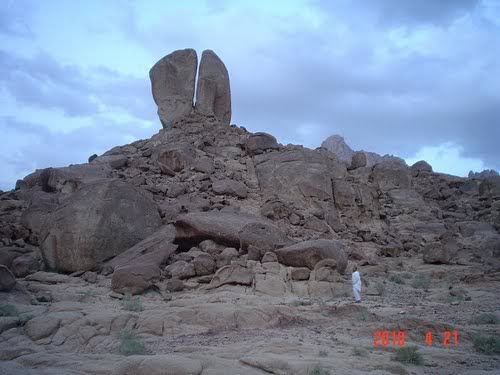
Suddenly the Old Man stops and listens, and after a moment he says, “God tells me to have you guys wait here while I go up to the rock yonder.” Moses is not all that sure he really heard that, but God seems to speak to him in dreams, and last night he dreamed of a rock that looked like that one. He walks to the rock and he wonders, “What am I to do now?”. 

He doesn’t know. “All right,” he thinks, “let me talk with the rock.” The rational part of him says “You are really losing it boy!” However he decides to ask the question that he asked the rock in the dream last night. He puts his hand on the part of the rock where there is an overhang which casts some shade, and he feels the rock. It is hard, solid, and old, made up of different layers and looks like a mixture of igneous and metaphoric rock. That would suggest that a volcano spilled the energy from the depth of the earth and that was partly covered with the sand of the wilderness and compressed by tons and centuries of pressure.  An earthquake at some point set it free.

The Old Man asked the rock, “Who are you?” 

The rock answered by singing: “I am a Rock - I am an i-i-i-i-island! And a rock feels no pain and an island never cries.”

“Where did that come from?” the old Man queried.

The Rock said, “I forgot you humans can only see time in a linear fashion, whereas I see it as a spiral. It is a song from two Jewish boys, Simon and Garfunkel, who I thought you knew since you were Jewish too. What do you want?

The Old Man said, “I need your help.”

The Rock said, “What - so you can use me, exploit me, cut me up and use me to decorate your kitchens and bodies or use me for one of your pyramids to celebrate yourself? I am happy just the way I am. As S and G will sing thousands of years from now:
I've built walls,
A fortress deep and mighty,
That none may penetrate.
I have no need of friendship; friendship causes pain.
It's laughter and it's loving I disdain.
I am a rock,
I am an island.

Don't talk of love,
But I've heard the words before;
It's sleeping in my memory.
I won't disturb the slumber of feelings that have died.
If I never loved I never would have cried.
I am a rock,
I am an island.

The Rock stopped singing and said, “I don’t owe you a thing.”

The Old Man said, “For an entity that wants to speak for herself, you are using a lot of another’s words. The question remains, ‘Who are you?’ Not the outer show you display, but who are you underneath that mask you are wearing?”

The Rock shot back, “Who cares? Just leave me alone in this God forsaken place.”

Moses said, “I can’t let you alone for I have my hand on you and I feel the pain in you that you deny. You and I are connected. When I had my encounter with God in another wilderness, the burning bush burned away my isolation, and I could again feel the pain of my people in my very soul. I can feel the longing of all creation to be united again - to enter into the continuing encounter with our true self, who we were created to be. You are a rock, and you were formed from the energy that was bursting when the Womb of God spoke and she brought forth all of creation. You and I share the same star dust of the light that shone in the darkness. God is not far away above the heavens but right here in the sacred space between us. I call on you to change the soul, the name, of this place from “God forsaken” to “God is with us”. Get over yourself, for it is not about you but the God that lives within you. When you share that divine nature, you become as God is - connected to all the suffering of the world of animal, plant, or mineral. It is one of the reasons that we humans pick up stones, to touch them and feel their deeper self in their hands. It is one of the reasons we humans plant trees which bear no fruit we can eat but which give beauty to the world we live in. It is one of the reasons we humans have pets, to learn and show compassion. It is one of the reasons we humans enter into community and relationships, for we are not meant to be alone in this world.”
 
The Old Man paused and waited.  He kept his hand on the rock and became aware of the rock’s longing. Moses said, “You have a spring of living water deep within you, from the core of your being. I ask you in the name of all that binds us together to open yourself up to share that water with my people. The water is a treasure given to you by God, not to be hoarded due to your private fear, but for you, as a steward of that gift, to share with God’s entire world. I have in my hand a staff that I used to part the Sea of Reeds; I will now touch it to your side so that you might be no longer apart but healed, so that you may give the treasure that is inside you. As you are healed, you have the ability to share yourself if you choose, only if you choose to be a channel of God’s peace.

And the water flowed and the people were healed of their thirst and fear, and they knew in their souls that the Rock was called “The LORD is with us”.

The Old Man Drawing the Water Out of the Rock (poem)
Knowing that God is with me
I am stopping and listening
Coming to talk to the Rock
Deciding on asking questions

I am stopping and listening
Touching the depth of being
Deciding on asking questions
Sharing the same star dust

Touching the depth of being
We are not meant to be alone
Sharing the same star dust
Having living water deep within

We are not meant to be alone
Coming to talk to the Rock
Having living water deep within
Knowing that God is with me