Wednesday, December 24, 2014

Mr. Jones Response


A Reflection for Christmas Eve                                              All Saints’ Church, Southern Shores, NC  December 24, 2014                                                                Thomas E. Wilson, Rector
Isaiah 9:2-7        Titus 2:11-14         Luke 2:1-14
Mr. Jones' Response

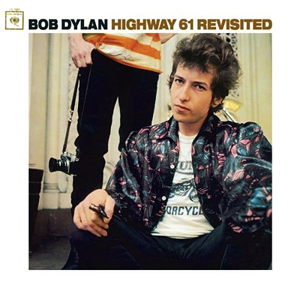
Steve Blackstock, our organist, sends me all sorts of stuff, and last week he sent me a Saturday Night Live skit  http://www.hulu.com/watch/726779    about a college kid coming home for the holidays and attending Christmas Services.  As a newly-arrived atheist, Devin say, “You can always tell a sophomore, but you can't tell him much.” I was a bit of a rebel and a wannabe atheist coming home from Carolina for Christmas break, and I went to the Christmas Eve service at the downtown church. I saw all those people who seemed so focused on the ceremony and saying Peace on Earth when there was this war going on. At that time I wanted to sing a song from one of my favorite albums, Highway 61 Revisited, by Bob Dylan. The song was Ballad of a Thin Man. This is the part that I wanted to sing out:
And you know something is happening
But you don't know what it is
Do you, Mister Jones ?

Now you see this one-eyed midget
Shouting the word "NOW"
And you say, "For what reason ?"
And he says, "How ?"
And you say, "What does this mean ?"
And he screams back, "You're a cow
Give me some milk
Or else go home".

Because something is happening
But you don't know what it is
Do you, Mister Jones ?

I did not sing that song out loud that night, but it went coursing through my brain. 49 years later that song came back to me, and I realized that this was what was going on in Luke's Gospel message for tonight. Luke starts off with Caesar Augustus, the one who destroyed the Roman Republic and became its military dictator, the “First Citizen”, and began the Roman Empire. Augustus proclaimed the “Pax Romana”, Roman Peace, which was done by military conquest followed by state-sponsored terror over its citizens. That is what Caesar meant when he proclaimed “Peace on Earth” from his sumptuous palace in Rome with battalions of bodyguards protecting him and brigades of servants catering to his every desire.  His wife was waiting for him to die, and some say she poisoned him in 14 AD, so that her son from a previous marriage, the sociopath Tiberius, could really show the world how to bring “Peace through Terror”.  “Something is happening and you don't know what it is, do you Mr. Caesar?”

Luke remembers Caesar Augustus, sure of his power, calling for an Empire-wide census; as misers like to count their coins, so tyrants like to count their subjects. At the same time in a nowhere part of the Empire, there is a little nobody called Mary. She, unlike Caesar, is outwardly vulnerable. She has no servants to care for her during her pregnancy, she only has Joseph, a man who married this young pregnant and unwed teenage girl. Joseph is called a “tecton”,  which we like to translate as “carpenter” but could also mean itinerant laborer, a very vulnerable person.  Joseph probably lived in Nazareth, probably working in Sepphoris, a city built by the Roman Client King Herod the Great and later destroyed in the same year as his death and Jesus' birth.  Joseph probably was a poor man and there were no servants. According to the story this poor family has to make a trip to Bethlehem, 80 miles, a week-long journey for a pregnant woman walking barefoot. Herod the Great  was a good client and friend of Augustus ever since Augustus defeated Mark Antony and Cleopatra for control of Rome, and Herod changed sides and sucked up to Augustus. Herod was a ruler who had killed one of his wives and three of his sons because he was so paranoid - and he had good reason to be paranoid.  His life was centered in his fear of being vulnerable. He was afraid of losing his title,  “King of the Jews”. And now, in Herod's own Kingdom, there was a defenseless family whose son would be heir to the title of King of the Jews.  Something is happening but you don't know what it is, do you Mr. Herod?”

Luke calls the town of Bethlehem “the city of David” because David was born there, but Jerusalem is also called the “City of David” because he made it his capital; so Jesus will be born in one of the cities of David and will die in the other. There were David's descendents all over Bethlehem who were having family celebrations because of the census which called people to go back to their families’ hometown. They probably had connections and found out about the decree before it was announced and booked all the rooms in the inns.  There was no room for this poor family with no connections. They have no time to care about these poor relations; but something is happening and you don't know what it is, do you Mr. David?”

There were shepherds outside of the town, expecting a quiet night watching their sheep  and the angels appeared to them and they knew something was happening.  They wanted to know what it is and they made the journey to go to the center of their soul and find out what it is. “Something is happening and you want to know what it is, don't you Mr. Shepherd?”

Tonight we remember the night something happened. Tonight is like that night; every night is like that night, when something is happening and if we become still and listen to the angels speak to our hearts, then we will know what it is. Bless you for coming here to night and being open to what God is doing.


Mr. Jones' Response (poem)
Now, listening for it.
Now, beyond the fear we know.
Something happens, now.

Thursday, December 18, 2014

Come On-a My House


A Reflection for IV Advent                                       All Saints’ Church, Southern Shores, NC December 21, 2014                                                            Thomas E. Wilson, Rector
Come On-a My House
Today on the Fourth Sunday of Advent we light the fourth candle on the Advent Wreath which is the symbol of love. The three other candles are symbols of hope, peace, joy, and now the fourth – Love. 

The coming of God fully into our humanity is a gift of love, and this week we prepare for the coming of Christ to live in our houses. Where is the room for Christ in your house?

How do we plan to invite Christ? I was listening to recordings of many singers -Rosemary Clooney, 
Julie London, Bette Midler, Madonna among them - singing their own version of “Come On-A 
My House, a song written by William Saroyan and Ross Bagdasarian, and I thought that theirs may 
not be the most subtle way to issue an invitation, even though the second verse has a Christmas theme:

Come on-a my house, my house, I'm gonna give you Christmas tree
Come on-a my house, my house, I'm gonna give you
Marriage ring and a pomegranate too, ah
Come on-a my house, my house a come on

In-a Pat’s and my house inside the front entrance, down the hall by the stairs, there is small dresser with the top laden down with objects like books, stones, icons, symbols, representations all jumbled up together. All these things have meaning to us for they are reminders of those times when we came into contact with the sacred. They constitute an altar of remembrance for us. Most of the time we treat it as holy space, but sometimes we just throw our keys or mail on it as we rush to do something else. For weeks at a time I will ignore that piece of furniture and then suddenly I am hit by the abundance of meaning and am called up short.

In-a the rest of my house, on every wall there are pictures and pieces of art; I think there is still about 12 square feet which is not yet covered with something with which we fell in love. We got them because they were pretty but also we kept them because they pointed to an aspect of the divine. There are many days when I will look at one piece, being lost in wonder as I remember when we got it and what it meant to us, when we saw it as a portal to the numinous. Yet, there are many days when I just walk in and my mind is so busy that I don’t notice a thing.

Lots of things are in-a our house and when we die, all of these things which have so much spiritual value will have very little material value in the marketplace of commerce, and many of these spiritually precious but commercially worthless things will end up in thrift shops, but as long as we live there, they remind us that this house is Holy Space. This is-a my home, the house in which I dwell, the place I go to know that I am loved and safe, and the place in which I invite others to come to give or receive blessings. It is my home, but it is also God’s, and I am its steward.

In the Hebrew Testament lesson from 2nd Samuel for today, King David decides that he wants to build a home for God - which is a nice sentiment - and the writer of this part of the story has fun with the Hebrew word for “house” which has four meanings in this periscope:  “palace”, “temple”, “dynasty”, and “family status”. The wordplay asks the question, “Which house of God does David want to build, and which does God want to build with David?” Looking at David’s record three chapter’s later when he enters into an adulterous affair with Bathsheba, the wife of Uriah the Hittite who a close friend, and then concocts a plan to murder Uriah after Bathsheba gets pregnant by David, and then plays the mourning friend in order to take her as his wife, it appears that David may have more interested in giving God a physical house in which to live instead of allowing God to live inside David, so that God won’t see what is going on in private. Sometimes we create spaces for God, religious buildings and shrines, and we lock the doors so God won’t get out and mess up our plans. However, if we are lucky, God will not be trapped inside religious buildings, for as the old saying goes, “God is a circle whose center is everywhere, whose circumference is nowhere.”  

In the lesson from the Gospel of Luke for today, the angel Gabriel comes in a vision to Mary and offers God’s plan to build a house within her in which the Holy may dwell. I think God’s angels are still making that same offer to us, to have God live within us so that we are God’s palace, temple, and family. The Christ event tells us that God doesn’t just live above the skies but in the core of all of our being. 

Victor Frankl, a Nazi Concentration Camp survivor, psychiatrist, and philosopher, had his own definition of God and wrote, “When I was fifteen years old or so, I came up with a definition of God to which, in my old age, I come back to more and more, I would call it an operational definition. It reads as follows: God is the partner of your most intimate soliloquies”.  God is dwelling within us  and is never far away, as Frankel found that God was also living in the hell of a death camp, as he wrote in Man’s Search For Meaning:

 We stumbled on in the darkness, over big stones and through large puddles, along the one road leading from the camp. The accompanying guards kept shouting at us and driving us with the butts of their rifles. Anyone with very sore feet supported himself on his neighbor's arm. Hardly a word was spoken; the icy wind did not encourage talk. Hiding his mouth behind his upturned collar, the man marching next to me whispered suddenly: "If our wives could see us now! I do hope they are better off in their camps and don't know what is happening to us."

That brought thoughts of my own wife to mind. And as we stumbled on for miles, slipping on icy spots, supporting each other time and again, dragging one another up and onward, nothing was said, but we both knew: each of us was thinking of his wife. Occasionally I looked at the sky, where the stars were fading and the pink light of the morning was beginning to spread behind a dark bank of clouds. But my mind clung to my wife's image, imagining it with an uncanny acuteness. I heard her answering me, saw her smile, her frank and encouraging look. Real or not, her look was then more luminous than the sun which was beginning to rise.

A thought transfixed me: for the first time in my life I saw the truth as it is set into song by so many poets, proclaimed as the final wisdom by so many thinkers. The truth – that love is the ultimate and the highest goal to which Man can aspire. Then I grasped the meaning of the greatest secret that human poetry and human thought and belief have to impart: The salvation of Man is through love and in love. I understood how a man who has nothing left in this world still may know bliss, be it only for a brief moment, in the contemplation of his beloved. In a position of utter desolation, when Man cannot express himself in positive action, when his only achievement may consist in enduring his sufferings in the right way – an honorable way – in such a position Man can, through loving contemplation of the image he carries of his beloved, achieve fulfillment. For the first time in my life I was able to understand the meaning of the words, "The angels are lost in perpetual contemplation of an infinite glory."

My prayer for us today is that we will find a place for God’s love to dwell in the houses of our souls. “Come on-a God’s house in you.”

“Come On-a My House.” (poem)
Bursting through Mary’s life the Angel sang
a version of “Come on-a my house, my house
come on.” Silent bells came to life and rang
Angelus to the vows of God and Virgin spouse,

of a version of “Come on-a my house, my house.
Home altar bells ring sets of altered, changed,
Angelus to the vows of God and Virgin spouse,
as divine shining light into our shadows ranged.

Home altars bells ring sets of altar changes,
and Mary goes to where is no set circumference
as divine shining light into our shadows ranges
covering sinners’ tower with love’s abundance.

Now, Mary enters where is no set circumference
going on as silent bells came to life and ringing
covering sinner’s towers with awe-full abundance,
bursting with Mary’s angels - love to us singing.

Thursday, December 11, 2014

"Tell Them Groucho Sent You!"


A Reflection for III Advent                           All Saints’ Episcopal, Southern Shores, N.C.  December 14, 2014                                       Thomas E. Wilson, Rector
Tell Them Groucho Sent You
On this third Sunday of Advent, we lit the third candle, the Pink Candle, and the day is sometimes called “Gaudete Sunday” from the ancient Introit to the Latin Mass for the Third Sunday of Advent quoting from Paul’s letter to the Philippians, “Gaudete in Domino semper” – “Rejoice in the Lord always”. Rejoicing is a theme that Paul will use many times. We think that Paul’s letters to the church in Thessalonica are the earliest letters we have, and in today’s Epistle reading from Paul’s first letter to the Thessalonians, he tells them “Rejoice always”.  The Hebrew Testament lesson from Isaiah recounts a song in which one of the students in the school of that Prophet sings, “I will greatly rejoice in the LORD, my whole being shall exult in my God.” In place of the Psalm for today, we hear Mary sing the Magnificat: “My spirit rejoices in God my savior.” In the Gospel lesson from John, John the Baptizer is joyfully proclaiming the coming of the Lord.

Anybody notice a theme that seems to run through these lessons? I keep getting hit with the idea of joy. It is easy to be joyful when everything is going my way, but can I be joyful when things are not going swimmingly? I think joy is a choice. 


Let’s look again at these lessons. In the passage of Isaiah, the exiles have come back from Babylon and the city of Jerusalem is a mess. The city walls had been torn down and wild animals roam the ruins. The Temple is destroyed, the farm lands in bad repair, the houses looted, and some of the returnees are going back to the old ways of exploiting the poor. Yet the song tells them to be joyful as they begin again from scratch, for God is with them and they are working on something greater than themselves. 

Mary in her song has just found out that she is now unmarried and pregnant, and yet she sings of her joy because God is with her and she is part of something greater than herself. 

Paul writes to the Thessalonians and later to the Philippians, and both of these churches are having different kinds of problems, but the Spirit of the Risen Christ is with them as they are part of something much larger than themselves, and they choose joy. 

In the Gospel lesson, John the Baptizer is out in the wilderness, not to build his own ego or to build a following for himself, but to die to himself and live to proclaim someone greater than himself. John chooses joy.

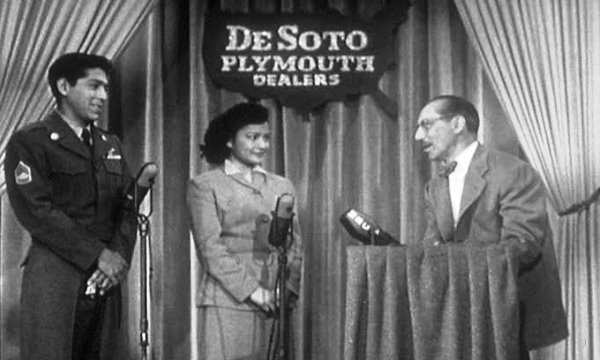
When I was growing up, Groucho had a radio show and then a television show called “You Bet Your Life.” It was a game show but “game” in name only; it was an excuse for ad-libs and interchange between Groucho and his guests. The guests would be asked questions and they might get some money or lose their winnings depending on their answers. Sometimes the losers would be asked a make-up question like, “For $50.00 - who is buried in Grant’s Tomb?”  Not everybody got that answer. 

 A 1961 Desoto
The sponsor of the show was the Desoto auto company and Groucho would always end the show by urging people to go to the Desoto dealer and “Tell them Groucho sent you!” In 1961 Groucho’s show went off the air and in that same year Chrysler stopped making Desoto. So seven years later when I bought my first car, I never got a chance to say “Groucho sent me!”

“You Bet Your Life” is another theme of these lessons we have for today. Betting Your Life is not like putting a couple bucks down on the lottery. The returning exiles are betting their lives; they could have stayed in Babylon and been safe - but miserable - so they chose a life of meaning instead of safety. Mary could have said no and ended up in a life of quiet desperation. She chose to be joyful and bet her life and heart. The churches in Thessalonica and Philippi could have passed on risking their lives in persecution and social ostracism by not entering into fellowship around Christ as their center. However, they chose to live into the Lord’s Prayer of working God’s will being done on earth as it is in heaven. They chose to be joyful and they bet their lives.  John the Baptizer literally bet his life, putting it on the line, giving up the life in his religious family’s comfortable existence; he gave up his own future.  It was a frustrating ministry, and he paid by having a mid-eastern power-mad ruler take off his head, but John lived a life filled with joy. For John and the others, death was not the worst thing to happen for they learned how to die to themselves daily as their way of living in the joy of God.

Richard Rohr in one of last week’s meditations wrote: “Death is not a changing of worlds as most imagine, as much as the walls of this world infinitely expanding. If you get love here, you have found the eternal home base, and you will easily and naturally live forever. Life is never about being correct, but only and always about being connected. Just stay connected! At all costs stay connected.”
Advent is a preparation for Christmas, and it is not about the presents we receive but about being present to the joy that is in every breath of God’s spirit in us. Choosing to be joyful is betting our lives; to die to our own egos so that we might live fully in this world and the next.
“Tell them Groucho sent you!”


Tell ’em Groucho sent you (poem)
Groucho said, “You Bet your life!”
Mary bet life, heart and hearth
each day on line, she’s her life
every moment in God’s breath.

John bet life, heart and hearth
his ego dies as if to live fully
each moment in God’s breath
to something larger than he.

Oh, die my ego, living to fully
and changing world by rejoicing
with something larger than me;
not getting but present being.

Changing world by rejoicing
on the line each day is my life,
being present to God joining,
Groucho say, “You bet your life!”


Resting in Peace


A Reflection of the Occasion of the Burial of
Eva Hitchner Wilkinson
November 6, 1917- December 5, 2014
December 11, 2014
All Saints Church- Thomas E Wilson, Rector
Psalm 23                 John 14:1-6
This is the second of four weeks of the season of Advent, the preparation for Christmas. Each week we light a candle to remember what we need to hold on to in order to welcome Christ into our hearts – for he is the example of a life of hope, the Prince of Peace, the embodiment of joy and God’s gift of love. The first week is hope, the second is peace, the third is joy and the fourth is love. Eva, the last of her generation, was born during the time when we were fighting a war to end all wars, She lived and her values were molded during the Great Depression; she was in nursing school when another war was raging; she raised her family during a cold war. All these things needed hope to get through and she died in the week of hope as she looked forward to being reunited with all those she has ever loved, who were still in her heart and in the depths of her being, but who had all made the journey to the other shore ahead of her. I was told of a dream she had before she died of continuing the conversation with the family that has gone before.

We gather together in the week of peace. Peace is not the absence of war but a deeper reality of peace inside oneself. We cannot make peace by war but by changing ourselves. Peace is a disease where we are ill at ease with the way the world works and we go deeply into ourselves to connect with the peace that passes all understanding, that begins with us and which we pass on to those lucky enough to be in the presence of a person of peace, where it turns into a communicable disease.  People I have talked to talk about her speak of her as an uncomplicated person and this service is a simple, uncomplicated service in her honor. 

Peace begins with the acceptance of the truth of the Serenity Prayer. It goes; “God grant me the serenity to accept the things I cannot change, the courage to change the things I can and the wisdom to know the difference, just for today.”

Eva was a farm girl in New Jersey who learned that sometimes the success of a crop is way beyond one’s pay grade. You can do everything right and you work very hard, but sometimes things that cannot be controlled are against success. You have a choice of feeling sorry for yourself, you can enter into blaming someone else, you can give up trying, you can be bitter and angry, or you can accept what you cannot change just for today and start over by finding a way to redeem what has happened and to give thanks for an opportunity to begin a new path.

In Nursing school, she learned that there are limits to medicine and she put that into practice by going in peace into hospice where death is not seen as a defeat but as an ending of this life and a door into another kind of existence. As a wife and mother she learned that things happen, and you work to accept and adjust.

Peace does not mean passivity where you just give up and stop fighting; it just mean that you pick your battles and pick your enemies. This is where you find what we can change and work hard nourished by hope, joy and love. When I was in seminary in 1982 I attended a series of lectures given by Elie Weisel, author, Concentration Camp Survivor, worker for Peace and Nobel Peace Prize winner in 1986. One of the stories he told was about when Father Abraham was in Sodom. He had come to Sodom to urge people to repent and at first people were interested in listening, but after a while they drifted away and ignore him. Later on they would mock him. A young boy came to him one night and said; “Father Abraham, you know you are able to change them. Why do you keep going out? You are not making a difference?” Father Abraham replied; “At first I went out to change them and now I go out so they don’t change me.”

Eva was not changed by the world; she continued to have the courage to work at making her world a better place. She knew that peace that passes all understanding that allowed her to share hope, joy and love with those who were lucky enough to know her.

Jesus in the lesson from John for today is talking about not letting our hearts be troubled; to be at peace. He says that his work is to allow people to enter dwelling places with God.  He called for us to live into God’s will on earth as it is in heaven. I don’t think he was talking about what happens after we die but about dwelling with God in this life. To “rest in peace” is not to be dead but to be fully alive knowing that the Great Shepherd is with us, giving us strength to make it through each day. A life lived in peace is where we live in the Kingdom of the Heavens right here and right now. Heaven is not a reward at the end of a good life but the reality of earth being expanded in our daily lives so that heaven is within us and that when we die in this mortal life, we continue that expansion on another plane of existence. Jesus came to show us how to live in hope, peace, joy and love with God and neighbor and to die to our own ego, our own greed, our own anger, our self-absorption, and our own resentments. Each day we learn how to die in order to live fully

Eva knew a lot of turmoil in her life but each day she rested in peace – no complaints, no excuses, and no regrets. Today we give thanks to God for a life rested in peace, walking with the Good Shepherd.